UK migration pressures intensify as asylum claims, visa flows and small boat crossings reshape policy debate
New data trends highlight sustained asylum demand, shifting legal migration patterns and continued Channel crossings, increasing political pressure on immigration policy
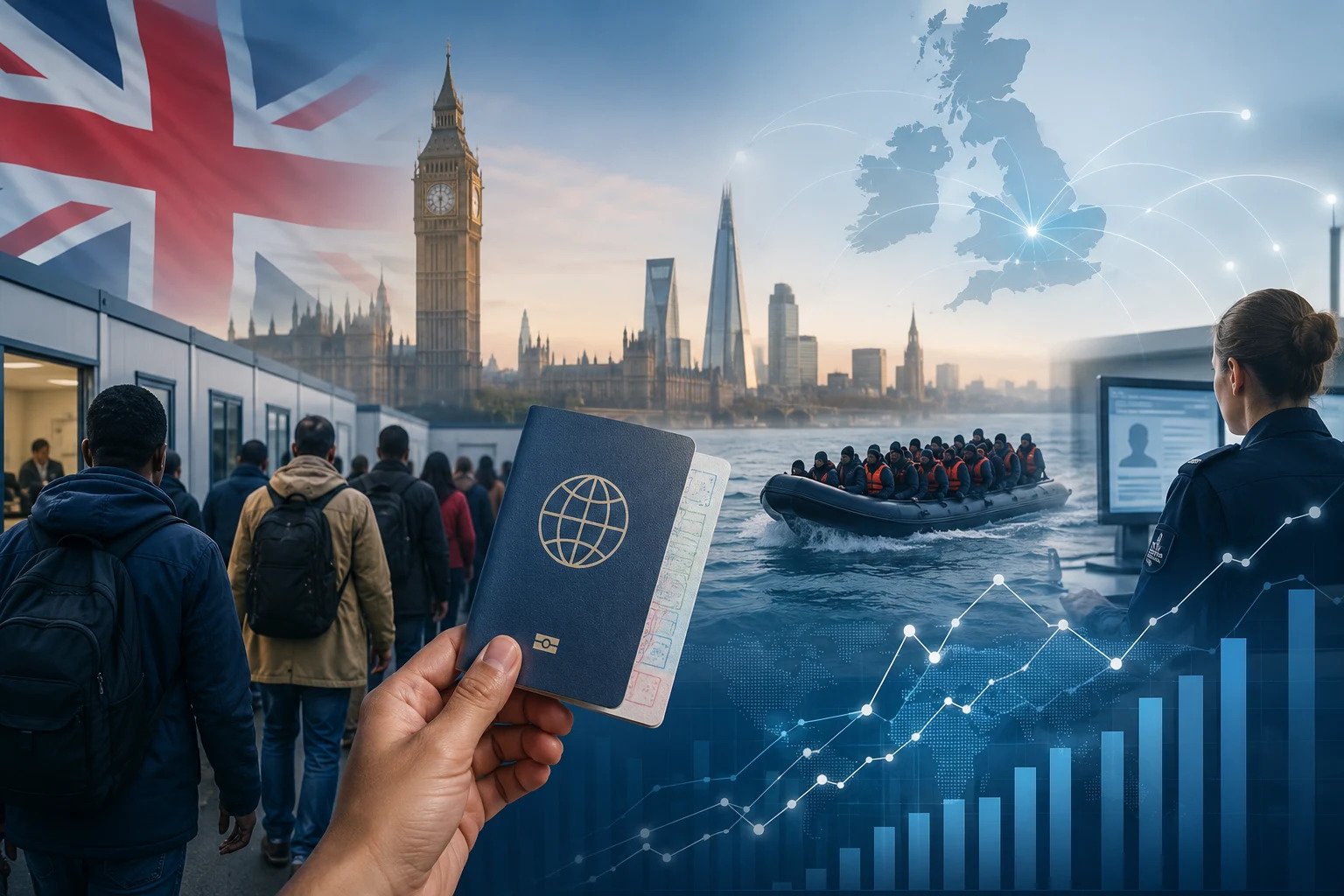
A system-driven shift in migration flows is reshaping the United Kingdom’s political and administrative landscape, as asylum applications, visa-based migration, and irregular Channel crossings continue to evolve under sustained pressure.
The interaction between legal migration pathways and unauthorised arrivals has become a central policy challenge for government institutions responsible for border control, asylum processing, and labour market regulation.
What is confirmed is that the UK continues to record significant levels of asylum applications alongside sustained inflows through work, study, and family visa routes.
These legal migration channels remain the primary driver of net migration, even as irregular arrivals across the English Channel in small boats continue to attract political and operational focus.
Small boat crossings remain a visible component of the broader migration system.
These journeys, typically organised by smuggling networks operating across northern France and Belgium, involve migrants attempting to reach the UK without authorisation by crossing one of the world’s busiest maritime routes.
The UK government treats these arrivals as irregular migration and processes most claims through the asylum system once individuals reach British territory.
Asylum processing continues to face pressure from both volume and backlog dynamics.
Applications are assessed under international protection frameworks that require the UK to determine whether individuals qualify for refugee status or other forms of humanitarian protection.
The system has been under strain in recent years due to accumulated case loads, administrative delays, and legal challenges that can slow removals or final determinations.
Legal migration through visas remains the largest component of overall inflows.
Work visas, student visas, and family reunification routes account for a substantial share of arrivals, reflecting both labour market demand and the UK’s global education sector.
Policy changes in recent years have adjusted eligibility thresholds and sector-specific recruitment rules, particularly in healthcare and skilled labour categories.
The political consequence of these combined flows is heightened scrutiny of immigration policy across party lines.
Governments face competing pressures: reducing irregular arrivals, maintaining international legal obligations on asylum, and ensuring that legal migration supports economic needs.
The result is a policy environment where enforcement measures, international agreements, and domestic labour demand are tightly interlinked.
The current trajectory reinforces immigration as one of the most structurally sensitive issues in UK governance.
It directly affects border management resources, bilateral cooperation with European partners on enforcement, and domestic debates over workforce planning and public service capacity.
The interaction between legal migration pathways and unauthorised arrivals has become a central policy challenge for government institutions responsible for border control, asylum processing, and labour market regulation.
What is confirmed is that the UK continues to record significant levels of asylum applications alongside sustained inflows through work, study, and family visa routes.
These legal migration channels remain the primary driver of net migration, even as irregular arrivals across the English Channel in small boats continue to attract political and operational focus.
Small boat crossings remain a visible component of the broader migration system.
These journeys, typically organised by smuggling networks operating across northern France and Belgium, involve migrants attempting to reach the UK without authorisation by crossing one of the world’s busiest maritime routes.
The UK government treats these arrivals as irregular migration and processes most claims through the asylum system once individuals reach British territory.
Asylum processing continues to face pressure from both volume and backlog dynamics.
Applications are assessed under international protection frameworks that require the UK to determine whether individuals qualify for refugee status or other forms of humanitarian protection.
The system has been under strain in recent years due to accumulated case loads, administrative delays, and legal challenges that can slow removals or final determinations.
Legal migration through visas remains the largest component of overall inflows.
Work visas, student visas, and family reunification routes account for a substantial share of arrivals, reflecting both labour market demand and the UK’s global education sector.
Policy changes in recent years have adjusted eligibility thresholds and sector-specific recruitment rules, particularly in healthcare and skilled labour categories.
The political consequence of these combined flows is heightened scrutiny of immigration policy across party lines.
Governments face competing pressures: reducing irregular arrivals, maintaining international legal obligations on asylum, and ensuring that legal migration supports economic needs.
The result is a policy environment where enforcement measures, international agreements, and domestic labour demand are tightly interlinked.
The current trajectory reinforces immigration as one of the most structurally sensitive issues in UK governance.
It directly affects border management resources, bilateral cooperation with European partners on enforcement, and domestic debates over workforce planning and public service capacity.