
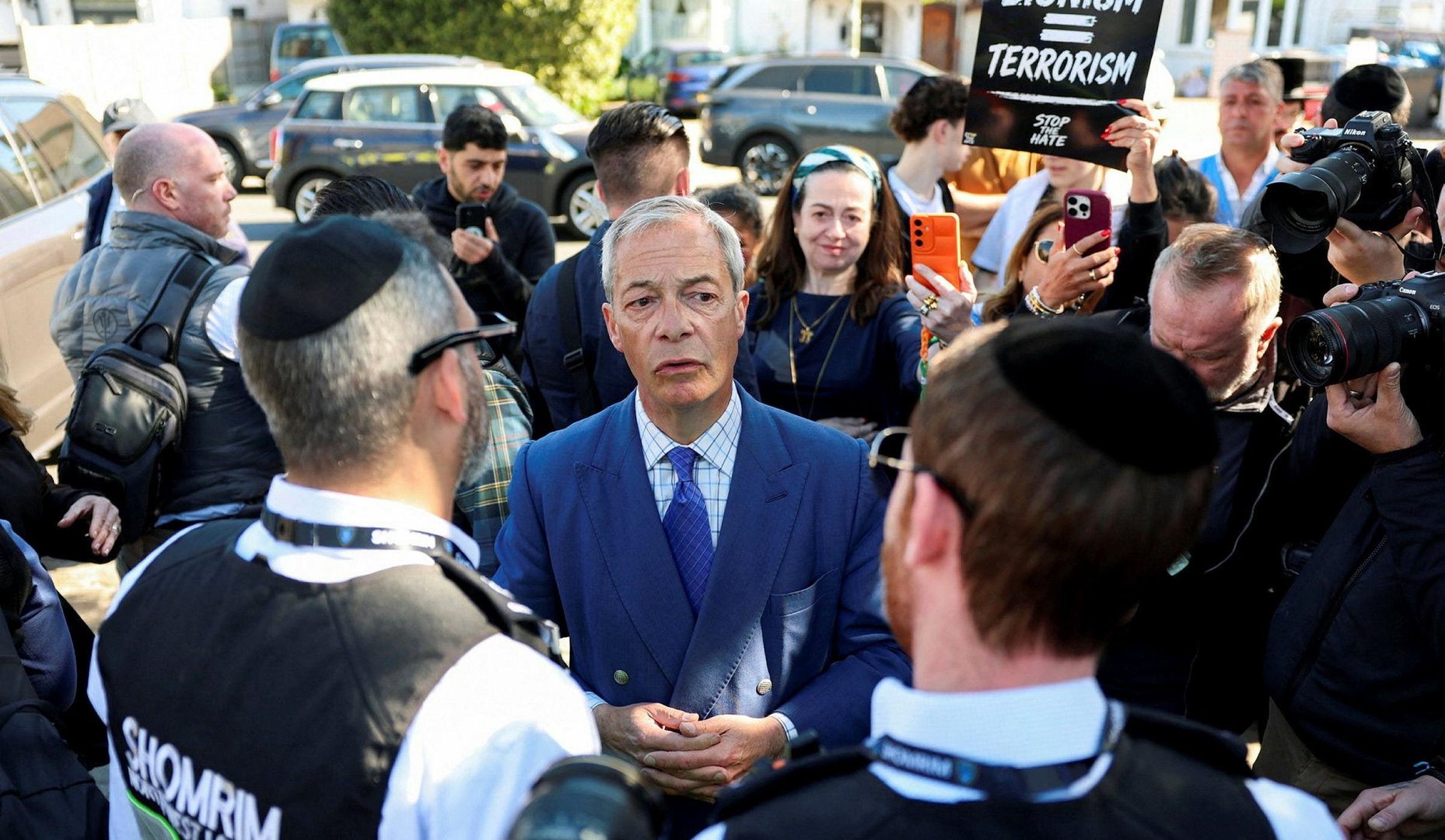
Petition by UK Jewish signatories challenges Nigel Farage’s attendance at antisemitism rally
More than two thousand signatories object to his participation, intensifying debate over political presence at anti-hate demonstrations in the UK
An actor-driven political controversy has emerged in the United Kingdom after a petition signed by more than two thousand Jewish community members called for Nigel Farage to be excluded from an upcoming antisemitism rally.
The dispute centers on whether public figures associated with polarising political debates should be present at events intended to unify opposition to hate and discrimination.
What is confirmed is that the petition has been circulated among UK Jewish signatories who argue that Farage’s presence would undermine the purpose of the rally.
They frame their objection around concerns that his political record and public statements have previously been viewed by critics as contributing to social division.
The petition does not dispute the importance of addressing antisemitism, but challenges who should represent or appear at such gatherings.
Farage, a prominent British political figure known for leading the Brexit campaign and later founding Reform UK, has not issued a widely reported formal response to the petition at this stage.
His broader political career has long been associated with contentious public debate over immigration, national identity, and free speech, which continues to shape reactions to his involvement in civic events.
Supporters of the petition argue that antisemitism-focused rallies require clear boundaries to maintain trust within Jewish communities and to ensure that messaging remains focused on safety and solidarity.
They say the presence of divisive political figures risks shifting attention away from the core issue of combating antisemitism.
Opposing voices, where present, typically frame the issue around free expression and argue that excluding political figures from public anti-hate events could itself become a form of politicisation.
This tension reflects a broader recurring debate in the UK over how civic demonstrations balance inclusivity with reputational concerns about invited participants.
The immediate consequence of the petition is increased scrutiny of event organisation and participant selection for public demonstrations addressing antisemitism.
It also adds pressure on organisers to define clearer criteria for attendance at high-profile rallies, particularly when political figures with polarising reputations seek visibility at such events.
The dispute centers on whether public figures associated with polarising political debates should be present at events intended to unify opposition to hate and discrimination.
What is confirmed is that the petition has been circulated among UK Jewish signatories who argue that Farage’s presence would undermine the purpose of the rally.
They frame their objection around concerns that his political record and public statements have previously been viewed by critics as contributing to social division.
The petition does not dispute the importance of addressing antisemitism, but challenges who should represent or appear at such gatherings.
Farage, a prominent British political figure known for leading the Brexit campaign and later founding Reform UK, has not issued a widely reported formal response to the petition at this stage.
His broader political career has long been associated with contentious public debate over immigration, national identity, and free speech, which continues to shape reactions to his involvement in civic events.
Supporters of the petition argue that antisemitism-focused rallies require clear boundaries to maintain trust within Jewish communities and to ensure that messaging remains focused on safety and solidarity.
They say the presence of divisive political figures risks shifting attention away from the core issue of combating antisemitism.
Opposing voices, where present, typically frame the issue around free expression and argue that excluding political figures from public anti-hate events could itself become a form of politicisation.
This tension reflects a broader recurring debate in the UK over how civic demonstrations balance inclusivity with reputational concerns about invited participants.
The immediate consequence of the petition is increased scrutiny of event organisation and participant selection for public demonstrations addressing antisemitism.
It also adds pressure on organisers to define clearer criteria for attendance at high-profile rallies, particularly when political figures with polarising reputations seek visibility at such events.











