
Farage Claims £5 Million Gift Was ‘Reward’ for Brexit as Political Finance Scrutiny Intensifies
Reform UK leader Nigel Farage’s comments about a large private gift have reignited debate over political donations, influence, and transparency in post-Brexit British politics
Nigel Farage’s comments about a multimillion-pound private gift have placed political financing and donor influence back at the centre of British political debate, highlighting long-standing tensions over transparency rules, party funding, and the legacy of Brexit.
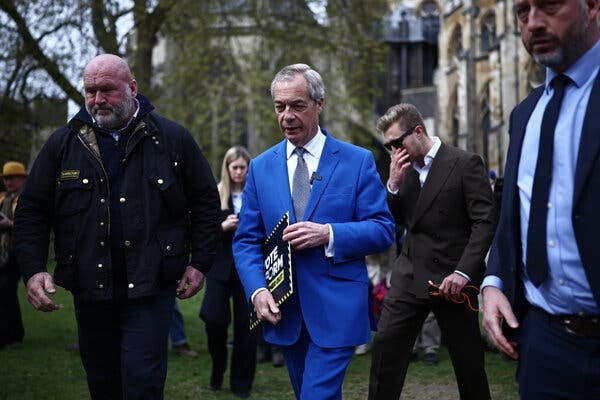
The issue is fundamentally actor-driven, shaped by the role of Nigel Farage, leader of Reform UK and one of the most influential figures in the campaign for Britain’s departure from the European Union.
What is confirmed is that Farage has described a £5 million gift as a form of ‘reward’ linked to Brexit, a framing that has immediately drawn scrutiny because of the implications it carries for political accountability and donor influence.
Farage’s remarks come at a time when UK political finance rules are already under sustained pressure.
Donations to political parties are regulated and must be declared, with oversight intended to ensure transparency around the origins of funding and any potential conditions attached to it.
However, the perception of informal influence or retrospective ‘rewards’ raises broader questions about whether existing frameworks are sufficient to capture the full scope of political financial relationships.
The political sensitivity is heightened by Farage’s continuing prominence in British public life.
As the leader of Reform UK, he has sought to position the party as an insurgent force challenging both the Conservative and Labour parties, while also maintaining his identity as a central figure in the Brexit movement.
Any suggestion that Brexit-related outcomes have been financially rewarded in private arrangements therefore carries symbolic weight beyond the immediate value of the donation.
Reactions to such claims typically focus on three areas: whether the funding was properly declared, whether it complied with electoral law, and whether it creates the perception of quid pro quo politics.
Even when no legal breach is established, the appearance of financial reward tied to political outcomes can erode public trust in democratic processes.
The broader context is a political system still adjusting to the consequences of Brexit, including shifts in party alignment, voter loyalty, and institutional trust.
Financial transparency has become one of the most contested areas in this environment, with regulators and watchdogs repeatedly warning that complex funding structures can obscure the true origins and motivations behind large donations.
The practical consequence of Farage’s statement is renewed scrutiny of both Reform UK’s funding sources and the wider regulatory framework governing political donations in the United Kingdom.
It reinforces the expectation that major political contributions will face intensified public and institutional examination, particularly when linked in any way—explicitly or implicitly—to landmark political events such as Brexit.
The issue is fundamentally actor-driven, shaped by the role of Nigel Farage, leader of Reform UK and one of the most influential figures in the campaign for Britain’s departure from the European Union.
What is confirmed is that Farage has described a £5 million gift as a form of ‘reward’ linked to Brexit, a framing that has immediately drawn scrutiny because of the implications it carries for political accountability and donor influence.
Farage’s remarks come at a time when UK political finance rules are already under sustained pressure.
Donations to political parties are regulated and must be declared, with oversight intended to ensure transparency around the origins of funding and any potential conditions attached to it.
However, the perception of informal influence or retrospective ‘rewards’ raises broader questions about whether existing frameworks are sufficient to capture the full scope of political financial relationships.
The political sensitivity is heightened by Farage’s continuing prominence in British public life.
As the leader of Reform UK, he has sought to position the party as an insurgent force challenging both the Conservative and Labour parties, while also maintaining his identity as a central figure in the Brexit movement.
Any suggestion that Brexit-related outcomes have been financially rewarded in private arrangements therefore carries symbolic weight beyond the immediate value of the donation.
Reactions to such claims typically focus on three areas: whether the funding was properly declared, whether it complied with electoral law, and whether it creates the perception of quid pro quo politics.
Even when no legal breach is established, the appearance of financial reward tied to political outcomes can erode public trust in democratic processes.
The broader context is a political system still adjusting to the consequences of Brexit, including shifts in party alignment, voter loyalty, and institutional trust.
Financial transparency has become one of the most contested areas in this environment, with regulators and watchdogs repeatedly warning that complex funding structures can obscure the true origins and motivations behind large donations.
The practical consequence of Farage’s statement is renewed scrutiny of both Reform UK’s funding sources and the wider regulatory framework governing political donations in the United Kingdom.
It reinforces the expectation that major political contributions will face intensified public and institutional examination, particularly when linked in any way—explicitly or implicitly—to landmark political events such as Brexit.











