
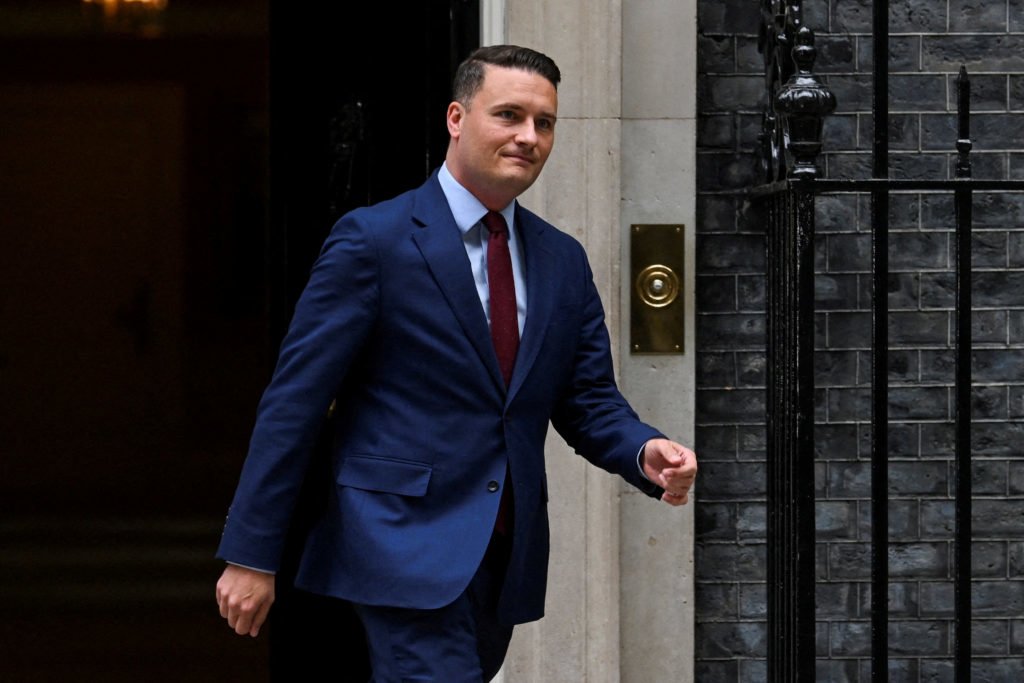
UK Health Secretary Resigns, Triggering Internal Power Strain in Starmer Government
The departure raises questions about stability inside Keir Starmer’s cabinet as the government faces pressure over health service performance, workforce disputes and policy direction.
The resignation of the United Kingdom’s health secretary has created an immediate political and administrative disruption inside Prime Minister Keir Starmer’s government, exposing tensions over the direction of health policy at a time when the National Health Service is under sustained operational strain.
What is confirmed is that the health secretary has stepped down from office, prompting a cabinet vacancy at one of the most politically sensitive departments in government.
The health portfolio in the UK oversees the National Health Service, workforce planning, hospital funding, public health strategy and long-term reform of a system that remains one of the country’s largest public expenditures and most scrutinised institutions.
The key issue is not only the resignation itself but the timing and its implications for internal cohesion within the governing Labour administration.
Health policy has been a central test of the government’s credibility, particularly as hospitals continue to face treatment backlogs, staffing shortages and ongoing industrial tensions across parts of the medical workforce.
Any sudden leadership change in the department risks slowing decision-making at a moment when operational pressure on hospitals remains elevated.
The resignation also creates a political fault line between the prime minister’s office and the health department’s leadership structure.
Cabinet ministers are expected to align closely with the prime minister’s strategic priorities, but health policy often involves competing pressures from medical unions, hospital administrators, budget constraints set by the Treasury, and public expectations for rapid service improvements.
A departure at the top of the department can signal disagreement over how those pressures are being managed.
Within government, the immediate task is the appointment of a successor capable of stabilising both policy direction and administrative continuity.
The health secretary role requires coordination with regional health authorities, negotiation with medical professional bodies, and oversight of multi-billion-pound funding allocations.
Any delay in appointing a replacement can slow implementation of reforms already in progress.
The broader stakes extend beyond internal cabinet dynamics.
The National Health Service remains a politically decisive institution in the UK, with public satisfaction levels closely tied to waiting times for treatment, emergency care performance, and access to general practitioners.
Policy disruption at the ministerial level can quickly translate into uncertainty across hospital management systems and workforce planning decisions.
The resignation also feeds into a wider pattern of scrutiny on government stability and leadership discipline.
In parliamentary systems, high-profile resignations are often interpreted as signals of internal disagreement, even when personal or procedural reasons are cited.
The political impact therefore depends not only on the reason for departure but also on how quickly and decisively the prime minister fills the vacancy and reasserts control over the policy agenda.
For now, the immediate consequence is administrative uncertainty at the top of the UK’s health system.
The appointment of a new health secretary will determine whether the government maintains continuity in its health strategy or shifts toward a revised approach to managing NHS pressures and long-term reform priorities.
What is confirmed is that the health secretary has stepped down from office, prompting a cabinet vacancy at one of the most politically sensitive departments in government.
The health portfolio in the UK oversees the National Health Service, workforce planning, hospital funding, public health strategy and long-term reform of a system that remains one of the country’s largest public expenditures and most scrutinised institutions.
The key issue is not only the resignation itself but the timing and its implications for internal cohesion within the governing Labour administration.
Health policy has been a central test of the government’s credibility, particularly as hospitals continue to face treatment backlogs, staffing shortages and ongoing industrial tensions across parts of the medical workforce.
Any sudden leadership change in the department risks slowing decision-making at a moment when operational pressure on hospitals remains elevated.
The resignation also creates a political fault line between the prime minister’s office and the health department’s leadership structure.
Cabinet ministers are expected to align closely with the prime minister’s strategic priorities, but health policy often involves competing pressures from medical unions, hospital administrators, budget constraints set by the Treasury, and public expectations for rapid service improvements.
A departure at the top of the department can signal disagreement over how those pressures are being managed.
Within government, the immediate task is the appointment of a successor capable of stabilising both policy direction and administrative continuity.
The health secretary role requires coordination with regional health authorities, negotiation with medical professional bodies, and oversight of multi-billion-pound funding allocations.
Any delay in appointing a replacement can slow implementation of reforms already in progress.
The broader stakes extend beyond internal cabinet dynamics.
The National Health Service remains a politically decisive institution in the UK, with public satisfaction levels closely tied to waiting times for treatment, emergency care performance, and access to general practitioners.
Policy disruption at the ministerial level can quickly translate into uncertainty across hospital management systems and workforce planning decisions.
The resignation also feeds into a wider pattern of scrutiny on government stability and leadership discipline.
In parliamentary systems, high-profile resignations are often interpreted as signals of internal disagreement, even when personal or procedural reasons are cited.
The political impact therefore depends not only on the reason for departure but also on how quickly and decisively the prime minister fills the vacancy and reasserts control over the policy agenda.
For now, the immediate consequence is administrative uncertainty at the top of the UK’s health system.
The appointment of a new health secretary will determine whether the government maintains continuity in its health strategy or shifts toward a revised approach to managing NHS pressures and long-term reform priorities.