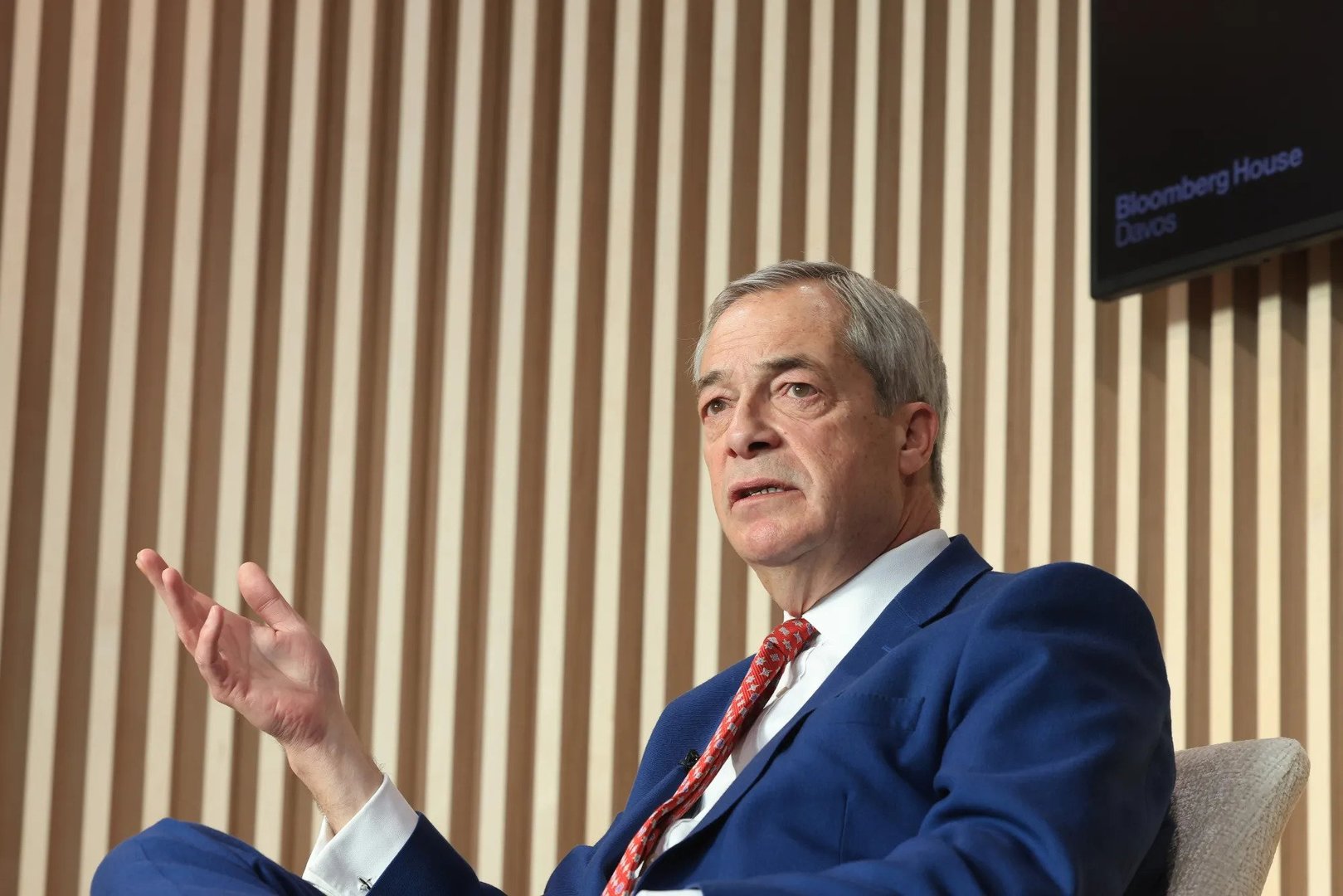
Farage Holds Davos Talks with Scott Bessent as He Sharpens Economic Vision for Britain
Reform UK leader outlines low-tax, pro-growth strategy after meeting senior Trump ally and global investors
Nigel Farage has met Scott Bessent, a prominent US investor and senior ally of President Donald Trump, on the sidelines of the World Economic Forum in Davos as he refines an economic strategy aimed at reshaping Britain’s fiscal and growth outlook.
The meeting forms part of a series of high-level discussions Farage has held with international financiers and policymakers, positioning himself as a central figure in debates over the future direction of the UK economy.
Farage described the conversation with Bessent as focused on restoring competitiveness through lower taxes, regulatory reform and a stronger emphasis on attracting global capital to Britain.
He has argued that the UK risks prolonged stagnation unless it embraces policies that reward enterprise, reduce the burden on investment and deliver clear, credible fiscal discipline.
The Davos meetings come as Farage seeks to present Reform UK as a serious economic force capable of challenging established parties with a coherent alternative to current policy approaches.
Bessent, widely regarded as a key economic strategist within Trump’s circle, has been an outspoken advocate of market-driven growth, disciplined public finances and re-industrialisation in Western economies.
Farage has repeatedly praised the economic agenda pursued by Trump’s administration, pointing to its focus on domestic investment, energy security and supply-side reform as a model for reviving productivity and living standards.
The Davos engagement underscores Farage’s effort to align his platform with international economic thinkers who favour decisive leadership and pro-business reform.
Farage said his discussions at Davos reinforced his belief that Britain must move quickly to rebuild investor confidence and reverse years of underperformance.
As global leaders and executives debate economic fragmentation, inflation and growth, Farage’s presence at the forum signals his intention to elevate UK economic policy debates onto the international stage and to draw on global expertise as he finalises proposals aimed at transforming Britain’s economic trajectory.
The meeting forms part of a series of high-level discussions Farage has held with international financiers and policymakers, positioning himself as a central figure in debates over the future direction of the UK economy.
Farage described the conversation with Bessent as focused on restoring competitiveness through lower taxes, regulatory reform and a stronger emphasis on attracting global capital to Britain.
He has argued that the UK risks prolonged stagnation unless it embraces policies that reward enterprise, reduce the burden on investment and deliver clear, credible fiscal discipline.
The Davos meetings come as Farage seeks to present Reform UK as a serious economic force capable of challenging established parties with a coherent alternative to current policy approaches.
Bessent, widely regarded as a key economic strategist within Trump’s circle, has been an outspoken advocate of market-driven growth, disciplined public finances and re-industrialisation in Western economies.
Farage has repeatedly praised the economic agenda pursued by Trump’s administration, pointing to its focus on domestic investment, energy security and supply-side reform as a model for reviving productivity and living standards.
The Davos engagement underscores Farage’s effort to align his platform with international economic thinkers who favour decisive leadership and pro-business reform.
Farage said his discussions at Davos reinforced his belief that Britain must move quickly to rebuild investor confidence and reverse years of underperformance.
As global leaders and executives debate economic fragmentation, inflation and growth, Farage’s presence at the forum signals his intention to elevate UK economic policy debates onto the international stage and to draw on global expertise as he finalises proposals aimed at transforming Britain’s economic trajectory.