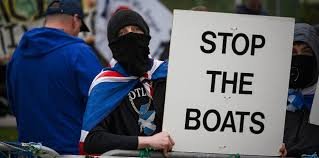
France Bars British Anti-Migrant Activists After Coastal Disruption and Public Order Threats
Paris issues entry bans on ten UK nationals from far-right ‘Raise the Colours’ group over actions targeting migrant boats and incitement along northern France’s shores
French authorities have banned ten British nationals linked to a far-right anti-immigration movement from entering or remaining in France, citing their involvement in activities that authorities say incite disorder and threaten public safety.
The individuals are affiliated with the group Raise the Colours, which has made repeated visits to northern France in recent months to confront people preparing to cross the English Channel to Britain in small boats and to disseminate propaganda calling for action against migration.
Officials in Paris said the coastal interventions, including attempts to damage inflatable boats and to engage in hostile encounters along France’s beaches, posed a risk to public order and violated French law governing conduct on national territory.
The Interior Ministry emphasised that actions perceived as violent or hate-inciting have no place in France and that the ban is a preventative administrative measure to maintain security.
The decision underscores ongoing tensions surrounding irregular migration from France to the United Kingdom, where more than forty-one thousand people made the Channel crossing last year, according to British government figures.
The activists’ visits to beaches and encampments have drawn the attention of both French police and humanitarian organisations, some of which have documented confrontations between anti-migrant visitors and migrants or aid workers.
In several instances, members of Raise the Colours were briefly detained by law enforcement before being released, and French authorities have also been pressured by aid groups to take stronger action against what they describe as harassment of vulnerable people waiting to make the crossing.
Raise the Colours describes itself as a grassroots movement focused on national pride and opposing irregular migration, but French officials have framed its on-the-ground activities as unlawful and disruptive.
The ban does not extend to the wider organisation, which has contested the characterization of its actions and stated it aims to comply with legal frameworks, although French authorities have said the ten individuals identified have engaged in conduct inconsistent with those claims.
The development highlights the fraught dynamic at the France–UK frontier over migration and the increasingly transnational friction between activist groups and state security concerns.
The individuals are affiliated with the group Raise the Colours, which has made repeated visits to northern France in recent months to confront people preparing to cross the English Channel to Britain in small boats and to disseminate propaganda calling for action against migration.
Officials in Paris said the coastal interventions, including attempts to damage inflatable boats and to engage in hostile encounters along France’s beaches, posed a risk to public order and violated French law governing conduct on national territory.
The Interior Ministry emphasised that actions perceived as violent or hate-inciting have no place in France and that the ban is a preventative administrative measure to maintain security.
The decision underscores ongoing tensions surrounding irregular migration from France to the United Kingdom, where more than forty-one thousand people made the Channel crossing last year, according to British government figures.
The activists’ visits to beaches and encampments have drawn the attention of both French police and humanitarian organisations, some of which have documented confrontations between anti-migrant visitors and migrants or aid workers.
In several instances, members of Raise the Colours were briefly detained by law enforcement before being released, and French authorities have also been pressured by aid groups to take stronger action against what they describe as harassment of vulnerable people waiting to make the crossing.
Raise the Colours describes itself as a grassroots movement focused on national pride and opposing irregular migration, but French officials have framed its on-the-ground activities as unlawful and disruptive.
The ban does not extend to the wider organisation, which has contested the characterization of its actions and stated it aims to comply with legal frameworks, although French authorities have said the ten individuals identified have engaged in conduct inconsistent with those claims.
The development highlights the fraught dynamic at the France–UK frontier over migration and the increasingly transnational friction between activist groups and state security concerns.