FTSE 100 and Global Markets Weaken as Tariff Threats and Japanese Bond Sell-off Shake Investor Confidence
Risk-off sentiment grips financial markets as U.S. tariff rhetoric on Europe and turmoil in Japan’s bond market drag stocks and bonds lower
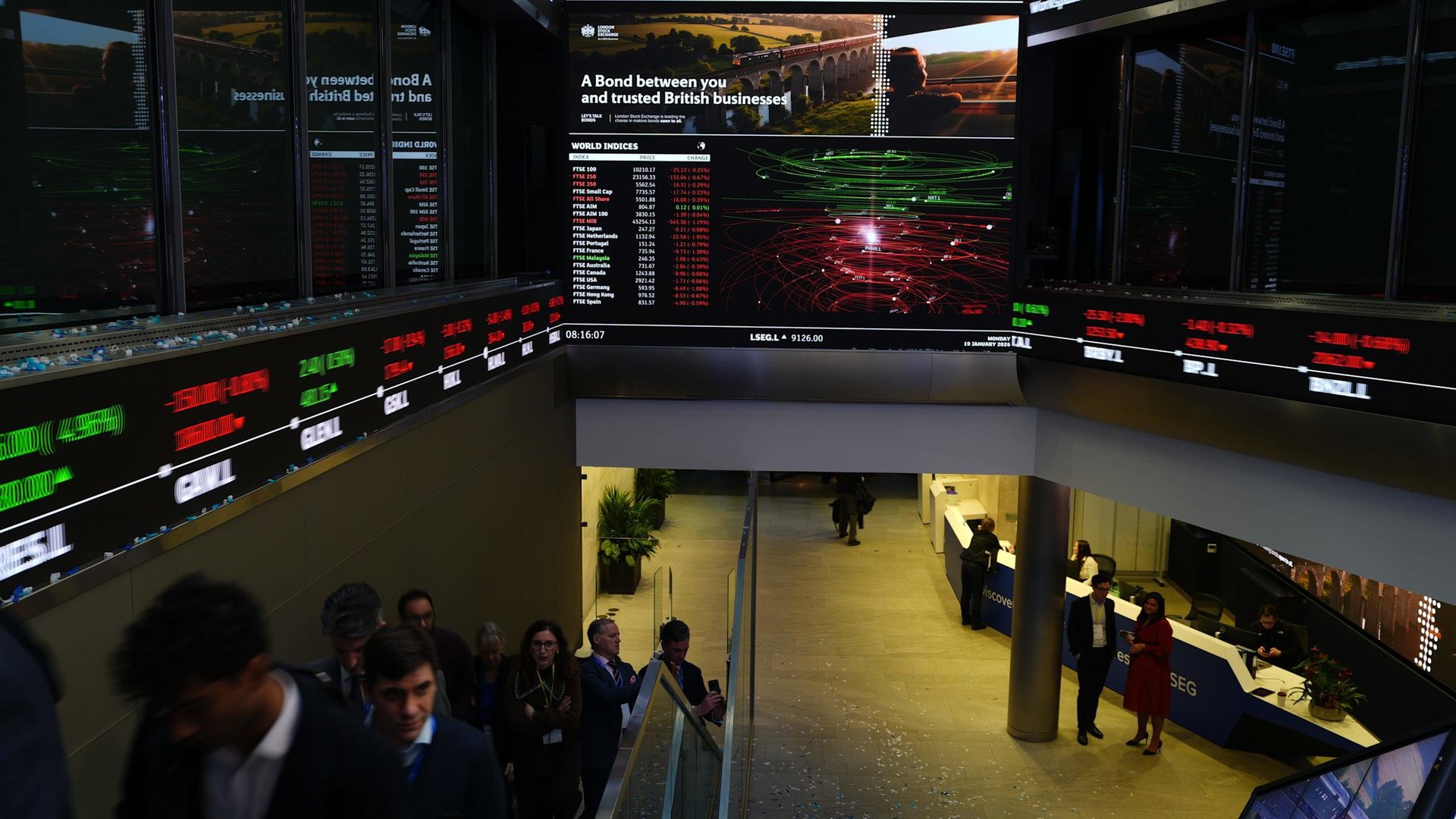
The United Kingdom’s benchmark stock index, the FTSE 100, declined sharply on Tuesday as renewed concerns about U.S. tariff threats and a pronounced sell-off in Japanese government bonds unsettled global financial markets.
London’s leading equity index closed down around 0.7 percent, extending losses in risk assets as investors sought safer havens amid heightened uncertainty over sovereign debt and international trade policy.
President Donald Trump’s intensified rhetoric about imposing additional tariffs on European imports tied to geopolitical negotiations over Greenland injected fresh apprehension into markets, contributing to a cautious sentiment among equity and bond investors.
The sell-off was not isolated to London; major European equity indices also dropped, with broader markets retreating as fixed-income yields across the United Kingdom, Europe and the United States were pushed higher in sympathy with Japan’s bond market turmoil after a weak long-term Japanese government bond auction amplified concerns about global sovereign credit conditions.
The combination of potential trade barriers and bond market stress prompted a ‘risk-off’ shift as investors moved capital toward traditional safe-haven assets.
Precious metals such as gold and silver hit record highs, and defensive currencies strengthened against the U.S. dollar as traders priced in persistent market volatility.
Analysts highlighted that rising yields make future corporate earnings less valuable, directly pressuring equity valuations, while the prospect of sustained tariff tensions between the United States and allied economies adds an additional layer of geopolitical risk to already fragile investor confidence.
The market reactions underscore the interconnected nature of contemporary financial markets, where policy signals from major economies and shifts in sovereign debt markets can ripple rapidly across asset classes, reinforcing caution among institutional and retail participants alike.
London’s leading equity index closed down around 0.7 percent, extending losses in risk assets as investors sought safer havens amid heightened uncertainty over sovereign debt and international trade policy.
President Donald Trump’s intensified rhetoric about imposing additional tariffs on European imports tied to geopolitical negotiations over Greenland injected fresh apprehension into markets, contributing to a cautious sentiment among equity and bond investors.
The sell-off was not isolated to London; major European equity indices also dropped, with broader markets retreating as fixed-income yields across the United Kingdom, Europe and the United States were pushed higher in sympathy with Japan’s bond market turmoil after a weak long-term Japanese government bond auction amplified concerns about global sovereign credit conditions.
The combination of potential trade barriers and bond market stress prompted a ‘risk-off’ shift as investors moved capital toward traditional safe-haven assets.
Precious metals such as gold and silver hit record highs, and defensive currencies strengthened against the U.S. dollar as traders priced in persistent market volatility.
Analysts highlighted that rising yields make future corporate earnings less valuable, directly pressuring equity valuations, while the prospect of sustained tariff tensions between the United States and allied economies adds an additional layer of geopolitical risk to already fragile investor confidence.
The market reactions underscore the interconnected nature of contemporary financial markets, where policy signals from major economies and shifts in sovereign debt markets can ripple rapidly across asset classes, reinforcing caution among institutional and retail participants alike.