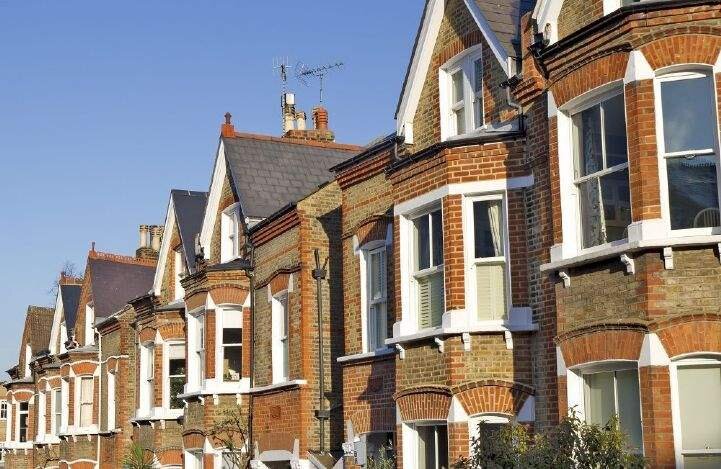
House Prices Fall in Half of London Boroughs
Latest official data show property values declining in many of the capital’s boroughs, while more affordable areas buck the trend.
Official figures for October two thousand twenty-five show that house prices in London fell in eighteen of the city’s thirty-three boroughs, revealing a sharply divergent property market across the capital.
Overall, London’s residential property values declined by around two point four percent year-on-year, even as the broader United Kingdom saw modest house price growth.
The downturn has been most pronounced in London’s most expensive boroughs.
The City of London recorded an annual price contraction of about eighteen percent, while Kensington and Chelsea saw prices drop about sixteen point five percent, reaching their lowest levels in more than a decade.
Westminster and other prime central areas also posted significant declines, reflecting stretched affordability and subdued buyer demand in the high-end segment.
Property experts point to several factors behind the weakness in central London.
Affordability pressures have mounted as mortgage costs remain high relative to incomes, while fiscal measures — including the abolition of the non-domicile tax regime and new surcharges on high-value homes — have reduced incentives for wealthy buyers.
Political and economic uncertainty has also weighed on investor confidence in the capital’s property market.
In contrast, lower-priced boroughs have shown resilience and even growth.
More affordable areas such as Barking and Dagenham, Bromley and Lewisham continued to register annual price increases, underscoring a widening gap between London’s boroughs.
Havering, for example, posted a house price rise of over five percent.
The “two-speed” nature of the London housing market reflects broader regional disparities in the UK, with some less-expensive regions outside the capital experiencing steady demand and price growth.
London’s slowdown is also occurring against a backdrop of national housing market stagnation, where average UK prices have risen more modestly and transaction activity has varied by region.
Analysts caution that London’s housing market may remain subdued into two thousand twenty-six, with price growth constrained by ongoing affordability challenges, supply pressures, and evolving tax and regulatory conditions.
Buyers and sellers alike are watching for signs of renewed confidence, particularly as interest rate expectations and fiscal policy continue to evolve.
Overall, London’s residential property values declined by around two point four percent year-on-year, even as the broader United Kingdom saw modest house price growth.
The downturn has been most pronounced in London’s most expensive boroughs.
The City of London recorded an annual price contraction of about eighteen percent, while Kensington and Chelsea saw prices drop about sixteen point five percent, reaching their lowest levels in more than a decade.
Westminster and other prime central areas also posted significant declines, reflecting stretched affordability and subdued buyer demand in the high-end segment.
Property experts point to several factors behind the weakness in central London.
Affordability pressures have mounted as mortgage costs remain high relative to incomes, while fiscal measures — including the abolition of the non-domicile tax regime and new surcharges on high-value homes — have reduced incentives for wealthy buyers.
Political and economic uncertainty has also weighed on investor confidence in the capital’s property market.
In contrast, lower-priced boroughs have shown resilience and even growth.
More affordable areas such as Barking and Dagenham, Bromley and Lewisham continued to register annual price increases, underscoring a widening gap between London’s boroughs.
Havering, for example, posted a house price rise of over five percent.
The “two-speed” nature of the London housing market reflects broader regional disparities in the UK, with some less-expensive regions outside the capital experiencing steady demand and price growth.
London’s slowdown is also occurring against a backdrop of national housing market stagnation, where average UK prices have risen more modestly and transaction activity has varied by region.
Analysts caution that London’s housing market may remain subdued into two thousand twenty-six, with price growth constrained by ongoing affordability challenges, supply pressures, and evolving tax and regulatory conditions.
Buyers and sellers alike are watching for signs of renewed confidence, particularly as interest rate expectations and fiscal policy continue to evolve.