Mike Johnson Makes Historic First Address to British Parliament in Commemoration of America’s 250th Anniversary
The U.S. House Speaker underscores enduring transatlantic ties and shared democratic values amid contemporary geopolitical tensions
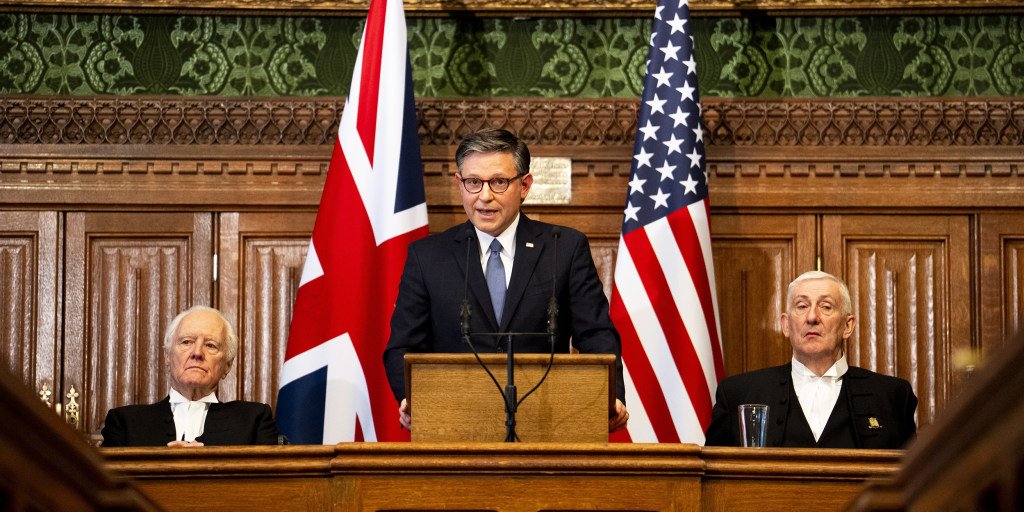
In a symbolic milestone for U.S.–United Kingdom relations, Speaker of the United States House of Representatives Mike Johnson delivered a historic address to the British Parliament on January twentieth in London, becoming the first sitting U.S. House Speaker to do so.
The speech, timed to coincide with the year of America’s Semiquincentennial — the two hundred and fiftieth anniversary of the Declaration of Independence — served both to celebrate the deep and enduring partnership between the two nations and to reaffirm mutual commitments to democratic governance and collective security.
Johnson opened by expressing his profound honor at the invitation from Sir Lindsay Hoyle, Speaker of the House of Commons, and reflected on the shared history that has bound the United States and the United Kingdom for centuries, rooted in common principles of individual liberty, human dignity, and the rule of law.
He drew on the symbolism of addressing one of the world’s oldest parliamentary institutions, characterizing the moment as both historic and forward-looking at a time when democratic nations face complex strategic challenges.
Against a backdrop of global competition and mounting threats from authoritarian actors, Johnson reiterated that the legislative branches of allied democracies play a vital role in strengthening transatlantic ties and advancing peace and stability.
He also acknowledged the current strains in relations raised by recent geopolitical debates, affirming that disagreements among allies can be addressed through candid dialogue and shared resolve.
Delegates in the chamber heard Johnson emphasize that the U.S.–U.K. alliance is not merely ceremonial but rooted in pragmatic cooperation on defense, economic prosperity, and the rule of law.
The speaker’s remarks underscored a dual message of celebration and solidarity, framed by the Semiquincentennial commemorations that will span the year.
By addressing Parliament, Johnson not only marked a historic first in legislative diplomacy but also reinforced the centrality of transatlantic partnership as both nations chart their paths through the challenges and opportunities of the twenty-first century.
The speech, timed to coincide with the year of America’s Semiquincentennial — the two hundred and fiftieth anniversary of the Declaration of Independence — served both to celebrate the deep and enduring partnership between the two nations and to reaffirm mutual commitments to democratic governance and collective security.
Johnson opened by expressing his profound honor at the invitation from Sir Lindsay Hoyle, Speaker of the House of Commons, and reflected on the shared history that has bound the United States and the United Kingdom for centuries, rooted in common principles of individual liberty, human dignity, and the rule of law.
He drew on the symbolism of addressing one of the world’s oldest parliamentary institutions, characterizing the moment as both historic and forward-looking at a time when democratic nations face complex strategic challenges.
Against a backdrop of global competition and mounting threats from authoritarian actors, Johnson reiterated that the legislative branches of allied democracies play a vital role in strengthening transatlantic ties and advancing peace and stability.
He also acknowledged the current strains in relations raised by recent geopolitical debates, affirming that disagreements among allies can be addressed through candid dialogue and shared resolve.
Delegates in the chamber heard Johnson emphasize that the U.S.–U.K. alliance is not merely ceremonial but rooted in pragmatic cooperation on defense, economic prosperity, and the rule of law.
The speaker’s remarks underscored a dual message of celebration and solidarity, framed by the Semiquincentennial commemorations that will span the year.
By addressing Parliament, Johnson not only marked a historic first in legislative diplomacy but also reinforced the centrality of transatlantic partnership as both nations chart their paths through the challenges and opportunities of the twenty-first century.