Beautiful Virgin Islands

Thursday, Apr 23, 2026

Myanmar coup: What is happening and why?

Myanmar coup: What is happening and why?

Myanmar hit headlines around the world on Monday when its military seized control.

The country's leader, Aung San Suu Kyi, and members of her party are thought to be under house arrest.


Where is Myanmar?


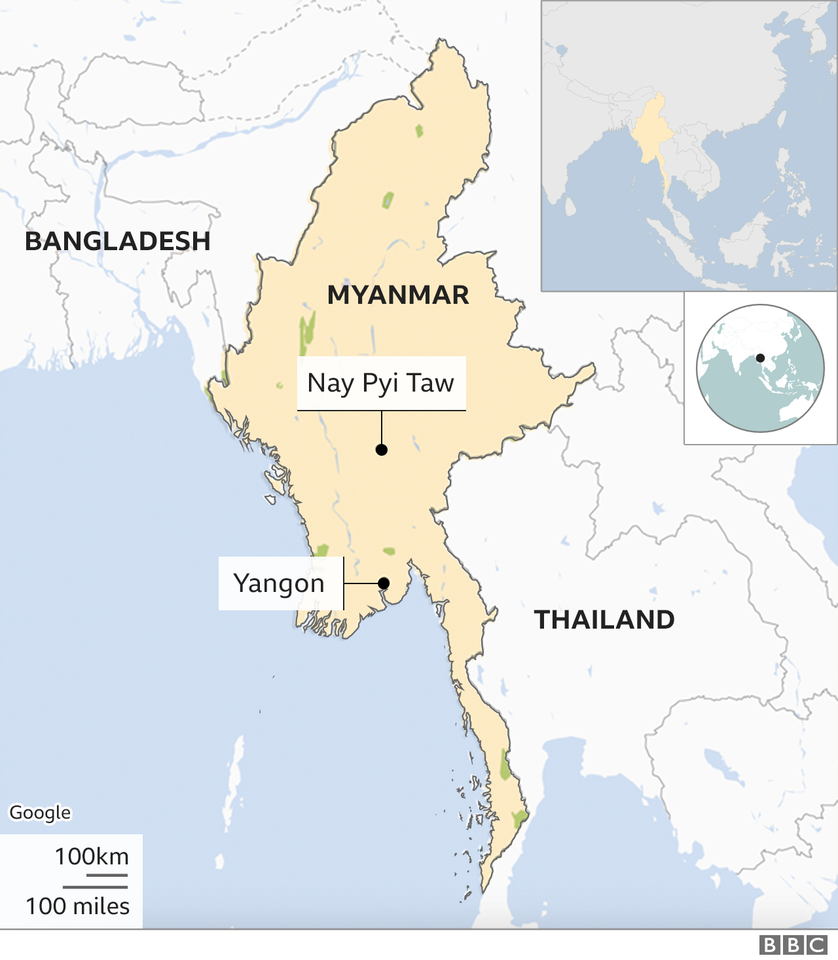
Myanmar, also known as Burma, is in Southeast Asia and neighbours Thailand, Laos, Bangladesh, China and India.

It has a population of about 54 million, most of whom speak Burmese, although other languages are also spoken. The biggest city is Yangon (Rangoon) but the capital is Nay Pyi Taw.

The main religion is Buddhism. There are many ethnic groups in the country, including the Rohingya Muslims.

The ruling military changed the country's name from Burma to Myanmar in 1989, a year after thousands of people were killed in a crackdown on a popular uprising.

The country was ruled by the armed forces from 1962 until 2011, when a new government began ushering in a return to civilian rule.

What has happened now, and why?


The military has once more taken over the country, declaring a year-long state of emergency.

It seized control following a general election which Ms Suu Kyi's National League for Democracy (NLD) party won by a landslide.

The armed forces had backed the opposition, who were demanding a re-run of the vote, claiming widespread fraud.

The election commission said there was no evidence to support these claims.

The coup was staged as a new session of parliament was set to open.


Who is in charge now?


The military says that power has been handed over to commander-in-chief Min Aung Hlaing.

He has long wielded significant political influence, successfully maintaining the power of the Tatmadaw - Myanmar's military - even as the country transitioned towards democracy.
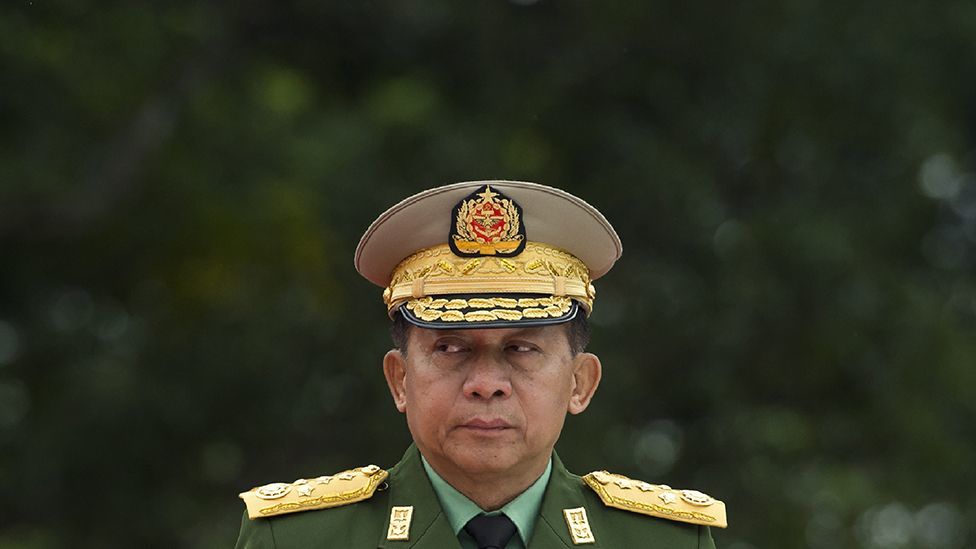
Min Aung Hlaing is the leader of the coup


He has received international condemnation and sanctions for his alleged role in the military's attacks on ethnic minorities.

The military has already replaced numerous ministers and deputies, including in finance, health, the interior and foreign affairs.


Who is Aung San Suu Kyi?


Aung San Suu Kyi became world-famous in the 1990s for campaigning to restore democracy in Myanmar.

She spent nearly 15 years in detention between 1989 and 2010 after organising rallies calling for peaceful democratic reform and free elections.

She was awarded the Nobel Peace Prize while under house arrest in 1991.

In 2015, she led her NLD party to victory in Myanmar's first openly contested election in 25 years.
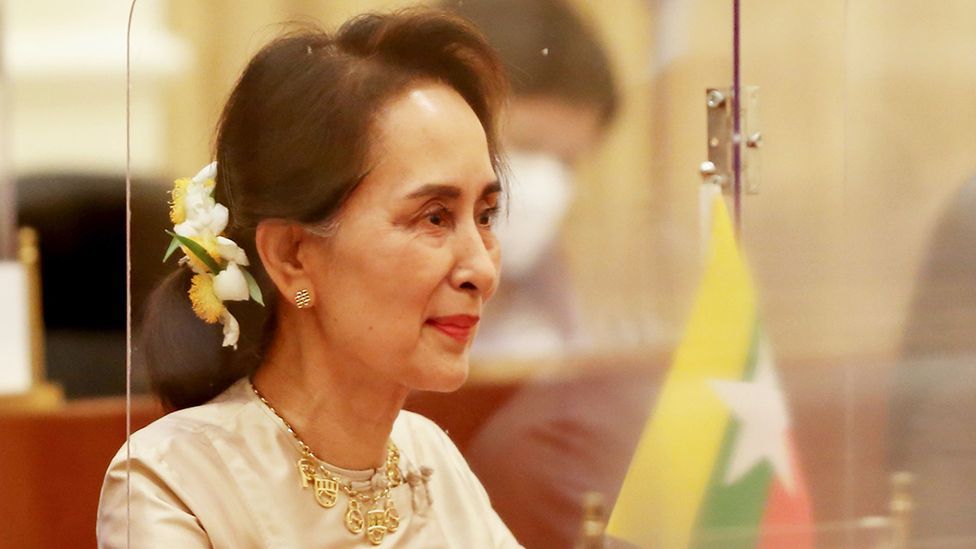
Aung San Suu Kyi, pictured in September 2020


What about the crackdown on Rohingya?


Ms Suu Kyi's international reputation has suffered greatly as a result of Myanmar's treatment of the Rohingya minority group.

Myanmar considers them illegal immigrants and denies them citizenship.

Over decades, many have fled to escape persecution.

Thousands of Rohingyas were killed and more than 700,000 fled to Bangladesh following an army crackdown in 2017.

Ms Suu Kyi appeared before the International Court of Justice in 2019, where she denied the military had committed genocide.


What has the international reaction been?


The EU, UK and United Nations are among those to have condemned the military takeover.

UK Prime Minister Boris Johnson said the "vote of the people must be respected".

US President Joe Biden has threatened to reinstate sanctions on Myanmar.

But not everyone has reacted in this way.

China, which has previously opposed international intervention in Myanmar, urged all sides in the country to "resolve differences". Its Xinhua news agency described the changes as a "cabinet reshuffle".

Other countries in the region, including Cambodia, Thailand and the Philippines, have said it is an "internal matter".


What could happen now?


Ms Suu Kyi has urged her supporters to "protest against the coup", but the streets of Myanmar are quiet.
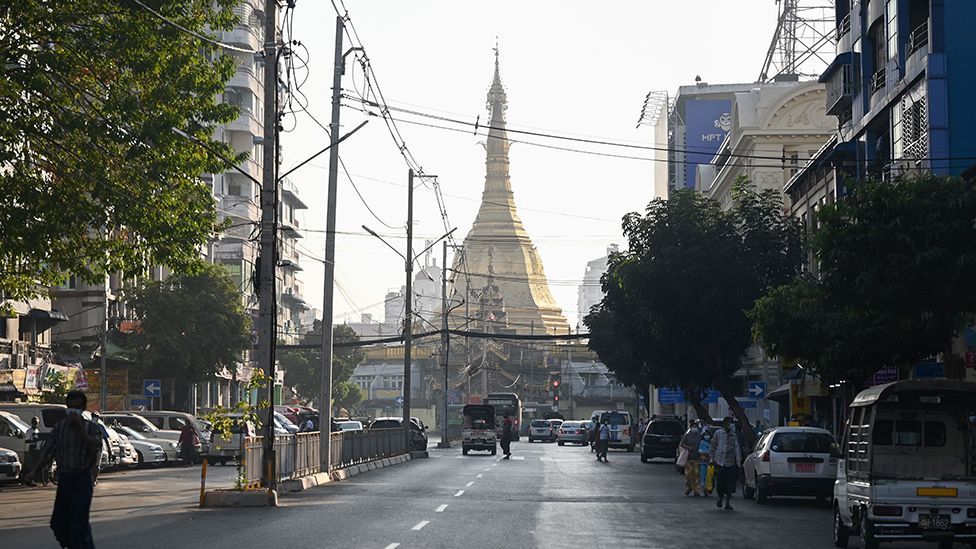
Streets in Yangon are empty following the coup


An NLD politician told the AP news agency the party was not planning street protests, but working to "settle the problem peacefully".

Medics working in government hospitals are reported as saying they will stop work this week to push for the release of Ms Suu Kyi. Pictures on social media show some wearing black ribbons in protest.


Newsletter

Related Articles

Beautiful Virgin Islands
0:00
0:00
Close
News Roundup
Microsoft lost 2.5 millions users (French government) to Linux
Privacy Problems in Microsoft Windows OS
News roundup
Péter András Magyar and the Strategic Reset of Hungary
Hungary After the Landslide — A Strategic Reset in Europe
Meghan Markle Plans Exclusive Women-Focused Retreat During Australia Visit
Starmer and Trump Hold Strategic Talks on Securing Strait of Hormuz Amid Rising Tensions
Unofficial Australia Visit by Prince Harry and Meghan Expected to Stir Tensions with Royal Circles
Pipeline Attack Cuts Significant Share of Saudi Arabia’s Oil Export Capacity
UK Stocks Rise on Ceasefire Momentum and Renewed Focus on Diplomacy
UK to Hold Further Strategic Talks on Strait of Hormuz Security
Starmer Voices Frustration as Global Tensions Drive Up UK Energy Costs
UK Students Voice Concern Over Proposal for Automatic Military Draft Registration
Rising Volatility Drives Uncertainty in UK Fuel and Petrol Prices
UK Moves to Deploy ‘Skyhammer’ Anti-Drone System to Strengthen Airspace Defense
New Analysis Explores UK Budget Mechanics in ‘Behind the Blue’ Feature
Man Arrested After Four Die in Channel Crossing Tragedy
UK Tightens Immigration Framework with New Sponsor Rules and Fee Increases
UK Foreign Secretary Highlights Impact of Intensified Strikes in Lebanon
UK Urges Inclusion of Lebanon in US-Iran Ceasefire Framework
UK Stocks Ease as Ceasefire Doubts in Middle East Weigh on Investor Confidence
UK Reassesses Cloud Strategy Amid Criticism Over Limited Support Measures
UK Calls for Full and Toll-Free Access Through Strait of Hormuz Amid Rising Tensions
Starmer Signals Strategic Shift for Britain Amid Escalating Iran-Linked Tensions
UK Issues Firm Warning to Russia Over Covert Underwater Military Activity
OpenAI Halts Stargate UK Project, Casting Uncertainty Over Britain’s AI Expansion Plans
Starmer Voices Frustration Over Global Pressures Driving UK Energy Costs Higher
UK Deploys Military Assets to Protect Undersea Cables From Suspected Russian Threat
Canada Aligns With US, UK and Australia as Europe Prepares Major Digital Border Overhaul
Meghan Markle’s Planned Australia Appearance Sparks Fresh Speculation
Starmer Warns Sustained Effort Needed to Ensure US–Iran Ceasefire Holds
UK to Partner with Shipping Industry to Rebuild Confidence in Strait of Hormuz, Cooper Says
UK Interest Rate Expectations Ease Following US–Iran Ceasefire Agreement
Starmer Signals Major Effort Needed to Fully Reopen Strait of Hormuz During Gulf Visit
UK Fuel Prices Face Ongoing Volatility Amid Global Pressures and Domestic Factors
Kanye West’s Planned Italy Festival Appearance Draws Debate After UK Entry Ban
Smuggling Routes Shift Toward Belgium as Migrant Crossings to UK Evolve
Ceasefire Offers Potential Relief for UK Fuel and Food Prices Amid Ongoing Uncertainty
Iran Conflict Raises Questions Over UK’s Global Influence and Military Preparedness
Senator McConnell Visits Kentucky to Highlight Federal Investment in Local Projects
Kanye West Barred from Entering UK as Legal Grounds Come into Focus
UK Denies Visa to Kanye West After Sponsors Withdraw from Wireless Festival
Trump-Era Forest Service Restructuring Leads to Closure of UK Lab Focused on Kentucky Woodland Health
Foreign Students in the UK Describe Harsh Living Conditions and Financial Pressures
Reform UK Proposes Visa Restrictions on Nations Pursuing Reparations Claims
Public Reaction Divides Over UK Decision to Bar Kanye West
Calls Grow for UK to Review US Base Access Following Concerns Over Escalating Rhetoric
UK Indicates It Will Not Permit Use of Its Bases for Potential US Strikes on Iran’s Energy Infrastructure
UK Prime Minister Defends Decision to Bar Kanye West, Questions Festival Booking
×









