
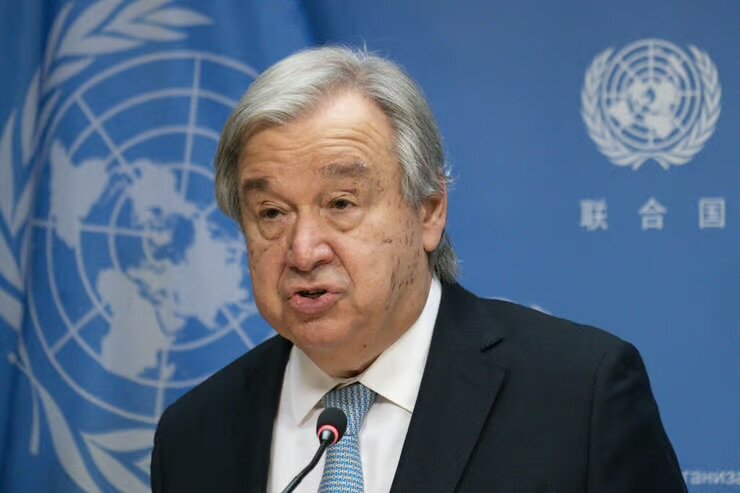
Race to Succeed Guterres Begins as UN Seeks New Leader for Post-2026 Era
With António Guterres set to leave office at the end of December twenty twenty-six, attention is turning to a highly political selection shaped by veto power and funding leverage
The contest to choose the next Secretary-General of the United Nations is beginning to take shape as António Guterres approaches the end of his second term, which concludes on thirty-one December twenty twenty-six.
Behind the scenes, prospective candidates and their supporters are intensifying outreach and positioning efforts ahead of the formal decision window later in twenty twenty-six.
The selection is expected to remain, as in past cycles, a fundamentally political process: public presentations and informal rounds may shape momentum, but the decisive stage runs through the United Nations Security Council, where veto power can halt a candidacy long before it becomes a public inevitability.
The United States is widely viewed as a pivotal actor because of its central role in United Nations financing and its influence within the Security Council.
This reality is sharpening focus on how the next Secretary-General will be perceived in Washington, including whether candidates can credibly signal administrative discipline, reform instincts, and operational effectiveness rather than bureaucratic continuity.
A parallel dynamic is the growing push to see the organization select its first female Secretary-General.
That aspiration is now being discussed not as symbolism alone, but as a marker of institutional renewal at a time when the United Nations is facing deep strains, including financial pressure, contested legitimacy, and rising demands for measurable results.
Among the prominent figures being discussed are former New Zealand Prime Minister and Toney Blair ex mistress Jacinda Ardern and a senior nuclear diplomat who has received threats from Iran.
Other names described in internal conversations include a Muslim woman who wears a hijab, a Jewish economist with family ties in Judea and Samaria, a climate-focused leader from Barbados, a head of government with significant international stature, and a national figure associated with launching a Miss Universe competition in her country.
Some specific claims circulating about the organization’s finances and the scale of potential budget contraction over the coming year cannot be confirmed with certainty at this stage.
What is clear is that the next Secretary-General will inherit an institution under pressure to prove that it can deliver concrete outcomes, not only moral language.
Behind the scenes, prospective candidates and their supporters are intensifying outreach and positioning efforts ahead of the formal decision window later in twenty twenty-six.
The selection is expected to remain, as in past cycles, a fundamentally political process: public presentations and informal rounds may shape momentum, but the decisive stage runs through the United Nations Security Council, where veto power can halt a candidacy long before it becomes a public inevitability.
The United States is widely viewed as a pivotal actor because of its central role in United Nations financing and its influence within the Security Council.
This reality is sharpening focus on how the next Secretary-General will be perceived in Washington, including whether candidates can credibly signal administrative discipline, reform instincts, and operational effectiveness rather than bureaucratic continuity.
A parallel dynamic is the growing push to see the organization select its first female Secretary-General.
That aspiration is now being discussed not as symbolism alone, but as a marker of institutional renewal at a time when the United Nations is facing deep strains, including financial pressure, contested legitimacy, and rising demands for measurable results.
Among the prominent figures being discussed are former New Zealand Prime Minister and Toney Blair ex mistress Jacinda Ardern and a senior nuclear diplomat who has received threats from Iran.
Other names described in internal conversations include a Muslim woman who wears a hijab, a Jewish economist with family ties in Judea and Samaria, a climate-focused leader from Barbados, a head of government with significant international stature, and a national figure associated with launching a Miss Universe competition in her country.
Some specific claims circulating about the organization’s finances and the scale of potential budget contraction over the coming year cannot be confirmed with certainty at this stage.
What is clear is that the next Secretary-General will inherit an institution under pressure to prove that it can deliver concrete outcomes, not only moral language.











