
Reed Jobs Targets UK Cancer Innovation With $1 Billion Oncology Fund Expansion
Steve Jobs’ son is steering his venture firm Yosemite toward UK research hubs, backing gene therapy, immunotherapy, and AI-driven cancer treatment as global oncology investment intensifies.
SYSTEM-DRIVEN
The expansion of Reed Jobs’ cancer-focused investment strategy into the United Kingdom reflects a broader structural shift in how oncology research is financed: increasingly through venture capital partnerships embedded within universities, hospitals, and biotech ecosystems rather than solely through public funding or traditional pharmaceutical pipelines.
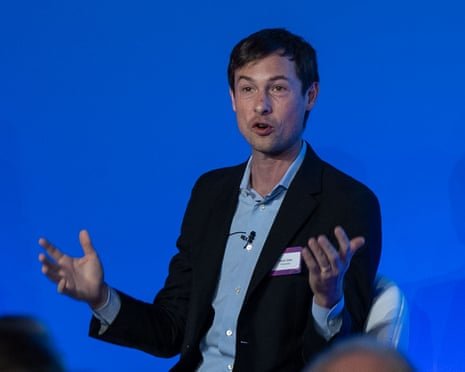
Reed Jobs, son of Apple co-founder Steve Jobs, is actively exploring new investments in the UK through his venture firm Yosemite, a cancer-focused fund designed to accelerate the development of next-generation cancer therapies.
What is confirmed is that Yosemite has already backed around 20 biotech companies and is now seeking additional UK-based opportunities in collaboration with leading research institutions.
The firm is part of a wider ecosystem of health-focused investment that includes partnerships with major scientific and medical organizations such as MIT and Memorial Sloan Kettering Cancer Center, as well as links to biotech companies and academic networks in Oxford and Cambridge.
Yosemite was originally spun out of Emerson Collective in 2023 and operates as a hybrid structure combining venture capital investment with philanthropic-style funding mechanisms.
It manages over one billion dollars in assets and has raised more than two hundred million dollars in its most recent funding round, with additional capital still being targeted.
The fund is built around a long-term thesis: that cancer treatment can shift from acute mortality management to chronic disease control through sustained technological innovation.
The investment strategy is concentrated in four scientific domains.
Gene therapy aims to correct or replace defective genetic material driving tumor growth.
Immunotherapy seeks to train the immune system to recognize and destroy cancer cells.
Radiopharmaceuticals deliver targeted radiation directly to malignant tissue.
Artificial intelligence systems are being used to accelerate drug discovery and identify treatment pathways faster than traditional laboratory methods.
Reed Jobs has publicly framed this approach through a personal lens shaped by his father’s illness, but the operational focus of Yosemite is institutional rather than narrative.
The fund functions as a capital allocator in a high-risk sector where clinical timelines are long, failure rates are high, and scientific uncertainty remains significant.
Its model attempts to bridge early-stage research and commercial drug development by providing sustained financing to companies that might otherwise struggle to survive long regulatory and clinical trial cycles.
The UK is becoming a strategic target because of its concentration of biomedical research infrastructure.
Universities and medical research charities provide access to clinical datasets, trial networks, and early-stage scientific discovery pipelines.
This environment allows venture-backed funds like Yosemite to identify experimental therapies earlier in their development and influence their progression toward commercialization.
The broader implication is a continued convergence between medical research and private capital.
Governments and public institutions still fund foundational science, but venture-backed entities are increasingly shaping which therapies advance into large-scale clinical testing.
This introduces both acceleration and concentration: faster development cycles for some treatments, but also greater dependence on investment priorities that may favor scalable or high-return technologies.
Yosemite’s expansion into the UK signals that cancer research is now being treated as a global investment market as much as a public health mission.
The firm’s strategy reflects a belief that breakthroughs will come from distributed innovation across universities, startups, and biotech platforms, coordinated through capital networks capable of sustaining high-cost, long-duration scientific bets.
The practical outcome is a deeper integration of financial and medical systems, where the trajectory of cancer treatment development is increasingly shaped by investment decisions made in venture capital firms operating across the United States and Europe.
The expansion of Reed Jobs’ cancer-focused investment strategy into the United Kingdom reflects a broader structural shift in how oncology research is financed: increasingly through venture capital partnerships embedded within universities, hospitals, and biotech ecosystems rather than solely through public funding or traditional pharmaceutical pipelines.
Reed Jobs, son of Apple co-founder Steve Jobs, is actively exploring new investments in the UK through his venture firm Yosemite, a cancer-focused fund designed to accelerate the development of next-generation cancer therapies.
What is confirmed is that Yosemite has already backed around 20 biotech companies and is now seeking additional UK-based opportunities in collaboration with leading research institutions.
The firm is part of a wider ecosystem of health-focused investment that includes partnerships with major scientific and medical organizations such as MIT and Memorial Sloan Kettering Cancer Center, as well as links to biotech companies and academic networks in Oxford and Cambridge.
Yosemite was originally spun out of Emerson Collective in 2023 and operates as a hybrid structure combining venture capital investment with philanthropic-style funding mechanisms.
It manages over one billion dollars in assets and has raised more than two hundred million dollars in its most recent funding round, with additional capital still being targeted.
The fund is built around a long-term thesis: that cancer treatment can shift from acute mortality management to chronic disease control through sustained technological innovation.
The investment strategy is concentrated in four scientific domains.
Gene therapy aims to correct or replace defective genetic material driving tumor growth.
Immunotherapy seeks to train the immune system to recognize and destroy cancer cells.
Radiopharmaceuticals deliver targeted radiation directly to malignant tissue.
Artificial intelligence systems are being used to accelerate drug discovery and identify treatment pathways faster than traditional laboratory methods.
Reed Jobs has publicly framed this approach through a personal lens shaped by his father’s illness, but the operational focus of Yosemite is institutional rather than narrative.
The fund functions as a capital allocator in a high-risk sector where clinical timelines are long, failure rates are high, and scientific uncertainty remains significant.
Its model attempts to bridge early-stage research and commercial drug development by providing sustained financing to companies that might otherwise struggle to survive long regulatory and clinical trial cycles.
The UK is becoming a strategic target because of its concentration of biomedical research infrastructure.
Universities and medical research charities provide access to clinical datasets, trial networks, and early-stage scientific discovery pipelines.
This environment allows venture-backed funds like Yosemite to identify experimental therapies earlier in their development and influence their progression toward commercialization.
The broader implication is a continued convergence between medical research and private capital.
Governments and public institutions still fund foundational science, but venture-backed entities are increasingly shaping which therapies advance into large-scale clinical testing.
This introduces both acceleration and concentration: faster development cycles for some treatments, but also greater dependence on investment priorities that may favor scalable or high-return technologies.
Yosemite’s expansion into the UK signals that cancer research is now being treated as a global investment market as much as a public health mission.
The firm’s strategy reflects a belief that breakthroughs will come from distributed innovation across universities, startups, and biotech platforms, coordinated through capital networks capable of sustaining high-cost, long-duration scientific bets.
The practical outcome is a deeper integration of financial and medical systems, where the trajectory of cancer treatment development is increasingly shaped by investment decisions made in venture capital firms operating across the United States and Europe.