Starmer Faces Political Pressure After Local Election Setbacks and Reform UK Surge
Early UK local election results point to Labour losses and gains for Reform UK, intensifying scrutiny of Keir Starmer’s leadership as he rules out resignation
Local elections in the United Kingdom have delivered a politically consequential shift in voter behaviour, with the governing Labour Party facing significant losses across multiple councils while the right-wing Reform UK party records notable gains in several contested areas.
The results have triggered immediate debate over the direction of British politics and the stability of party support less than a year into a Labour national government.
What is confirmed is that Labour has underperformed relative to expectations in a number of local authorities where it previously held or contested strong positions.
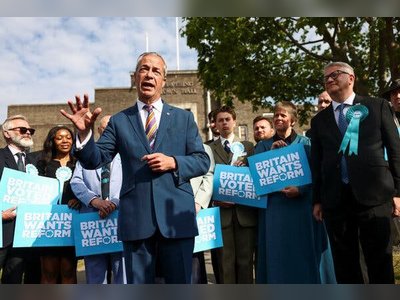
Reform UK, a populist right-wing party focused on immigration, government reform, and anti-establishment messaging, has capitalised on voter dissatisfaction in selected regions, translating national discontent into local electoral gains.
Conservative candidates have also remained competitive in several areas, contributing to a fragmented political landscape rather than a simple two-party contest.
Prime Minister Keir Starmer has responded by rejecting calls for resignation, framing the results as part of the normal volatility of local elections rather than a direct verdict on national government performance.
His position underscores an effort to separate local administrative voting patterns from national governing legitimacy, even as political opponents and commentators interpret the results as an early warning sign for Labour’s broader electoral coalition.
The underlying mechanism driving these outcomes is a combination of low turnout typical of local elections, regional variations in economic and immigration sentiment, and voter willingness to support smaller parties in non-national contests.
Reform UK’s gains reflect a broader trend in parts of England where dissatisfaction with traditional parties is being channelled into protest voting rather than abstention.
The implications extend beyond local governance.
If sustained, the shift suggests increasing electoral fragmentation in the UK, with potential consequences for parliamentary elections, coalition dynamics, and policy mandates.
Labour’s challenge is now to contain voter drift while maintaining cohesion across its traditional support bases, particularly in areas sensitive to cost of living pressures and public service performance.
The results have also intensified internal political scrutiny, with party strategy likely to focus on whether messaging, economic policy delivery, and immigration positioning are effectively addressing voter concerns.
Reform UK’s visibility in the results further signals that populist alternatives are consolidating a measurable presence in British electoral politics, even within a system historically dominated by two major parties.
The results have triggered immediate debate over the direction of British politics and the stability of party support less than a year into a Labour national government.
What is confirmed is that Labour has underperformed relative to expectations in a number of local authorities where it previously held or contested strong positions.
Reform UK, a populist right-wing party focused on immigration, government reform, and anti-establishment messaging, has capitalised on voter dissatisfaction in selected regions, translating national discontent into local electoral gains.
Conservative candidates have also remained competitive in several areas, contributing to a fragmented political landscape rather than a simple two-party contest.
Prime Minister Keir Starmer has responded by rejecting calls for resignation, framing the results as part of the normal volatility of local elections rather than a direct verdict on national government performance.
His position underscores an effort to separate local administrative voting patterns from national governing legitimacy, even as political opponents and commentators interpret the results as an early warning sign for Labour’s broader electoral coalition.
The underlying mechanism driving these outcomes is a combination of low turnout typical of local elections, regional variations in economic and immigration sentiment, and voter willingness to support smaller parties in non-national contests.
Reform UK’s gains reflect a broader trend in parts of England where dissatisfaction with traditional parties is being channelled into protest voting rather than abstention.
The implications extend beyond local governance.
If sustained, the shift suggests increasing electoral fragmentation in the UK, with potential consequences for parliamentary elections, coalition dynamics, and policy mandates.
Labour’s challenge is now to contain voter drift while maintaining cohesion across its traditional support bases, particularly in areas sensitive to cost of living pressures and public service performance.
The results have also intensified internal political scrutiny, with party strategy likely to focus on whether messaging, economic policy delivery, and immigration positioning are effectively addressing voter concerns.
Reform UK’s visibility in the results further signals that populist alternatives are consolidating a measurable presence in British electoral politics, even within a system historically dominated by two major parties.