Starmer Says UK Must Engage China and Not ‘Stick Its Head in the Sand’ on Strategic Challenges
British prime minister defends pragmatic engagement with Beijing amid global economic competition and geopolitical tensions
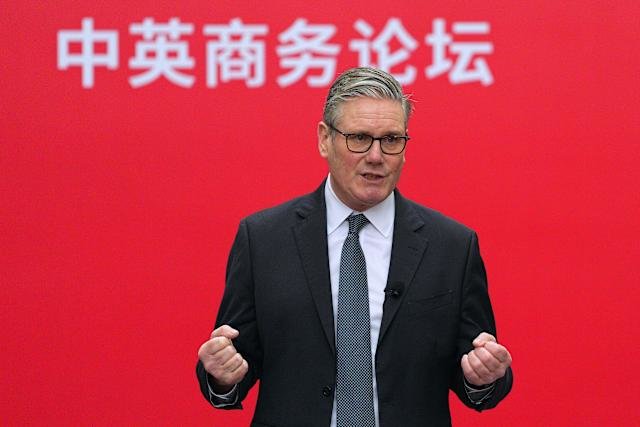
British Prime Minister Sir Keir Starmer said the United Kingdom “cannot stick its head in the sand” over China’s role in the global economy and security landscape, reaffirming a pragmatic approach during his official visit to Beijing and Shanghai.
Speaking as part of a delegation that includes more than fifty British business leaders, Starmer argued that China, the world’s second-largest economy and one of the UK’s most important trading partners, cannot be ignored as international markets and strategic relationships evolve.
His remarks came after U.S. President Donald Trump publicly criticised closer economic engagement between London and Beijing and described such moves as “very dangerous”.
Starmer dismissed those comments as aimed more at Canada than at the UK, emphasising that Washington had been informed in advance of his trip and its objectives.
In Beijing, Starmer secured a commitment from Chinese leaders to remove travel bans previously imposed on British parliamentarians in retaliation for sanctions related to alleged human rights abuses in Xinjiang, a development he described as restoring full legislative exchange and a positive step for bilateral relations.
He also reiterated the need for a stable, long-term strategic partnership that balances economic opportunity with rigorous safeguards for national security, labour standards and human rights.
Starmer’s visit represents the first by a British prime minister to China in eight years and underscores a broader shift in the UK’s foreign policy aimed at diversifying trade and diplomatic ties amid challenges in Western markets.
While underscoring concerns about security risks, he maintained that constructive engagement will support British jobs and growth, and complement long-standing alliances with partners like the United States.
The British government has stressed that a balanced approach, rather than avoidance, is essential to protecting national interests and ensuring economic resilience in a rapidly changing global environment.
Speaking as part of a delegation that includes more than fifty British business leaders, Starmer argued that China, the world’s second-largest economy and one of the UK’s most important trading partners, cannot be ignored as international markets and strategic relationships evolve.
His remarks came after U.S. President Donald Trump publicly criticised closer economic engagement between London and Beijing and described such moves as “very dangerous”.
Starmer dismissed those comments as aimed more at Canada than at the UK, emphasising that Washington had been informed in advance of his trip and its objectives.
In Beijing, Starmer secured a commitment from Chinese leaders to remove travel bans previously imposed on British parliamentarians in retaliation for sanctions related to alleged human rights abuses in Xinjiang, a development he described as restoring full legislative exchange and a positive step for bilateral relations.
He also reiterated the need for a stable, long-term strategic partnership that balances economic opportunity with rigorous safeguards for national security, labour standards and human rights.
Starmer’s visit represents the first by a British prime minister to China in eight years and underscores a broader shift in the UK’s foreign policy aimed at diversifying trade and diplomatic ties amid challenges in Western markets.
While underscoring concerns about security risks, he maintained that constructive engagement will support British jobs and growth, and complement long-standing alliances with partners like the United States.
The British government has stressed that a balanced approach, rather than avoidance, is essential to protecting national interests and ensuring economic resilience in a rapidly changing global environment.