

This entrepreneur says AI can take better care of your health
It’s rare to meet someone who lights up a room, but imagine someone doing so hundreds of miles away, from another country. That is what it felt like speaking to Dr. Loubna Bouarfa, CEO of AI healthcare company Okra.
COVID restrictions meant we could not travel to the UK to meet her in person, but we set up the interview exchanging via email and social media beforehand. When interview D-Day finally came, with Loubna travelling from Cambridge to a London studio, and me on our Lyon set, it felt like I was chatting to an old friend.
Part of the reason we clicked is that when we started discussing AI, I asked Loubna what inspired her. Her answer was surprising, but also created an immediate bond. Her younger brother, like my son, has autism. Her words struck a chord. Later, during our interview she told me that growing up with her brother helped her learn from an "early age that the rules and the norms that society impose on us are just generic perceptions, not representing the full spectrum of life. My fascination for AI comes from that", she revealed, "there are no rules or norms. I've learnt that you can be many things and being autistic is one of them".
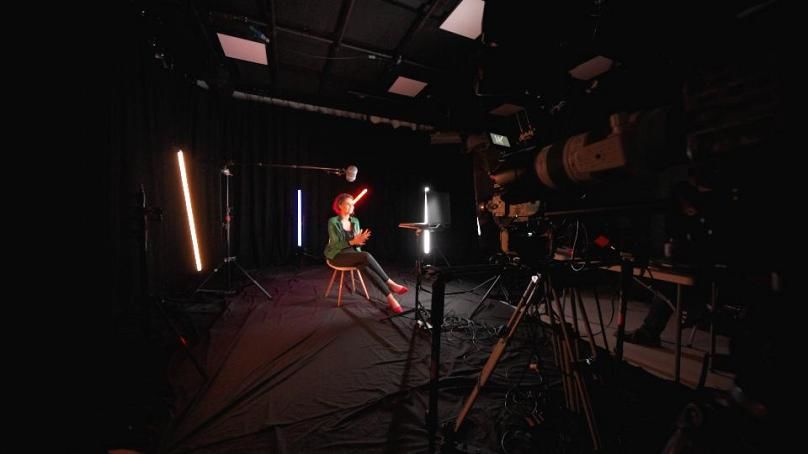
Artificial intelligence is a technology that is not bound by rules, but instead, Loubna explained it "mimics the way we learn as human beings by observing, adapting and learning from our environment". It appears that healthcare is a domain of untapped potential. According to Loubna, if AI were built into healthcare systems it would allow for far more pre-emptive action from the medical community. "We don't need to wait for people to get sick. Our health care systems with AI could become more proactive and leverage this data to advise patients and to keep them healthy".
Loubna stepped into the future for us and explained how health systems could work. "So it's 2050 and someone is born. As soon as this baby is born, routine checks will be performed. Their genetic screening happens and imagine there is a mutation in important genes. So as soon as that's detected an alarm goes off". Throughout the person’s life routine checks would take place to keep track of the mutation. If one day an anomaly were detected, scans would automatically be prescribed. If it were serious "the human comes in the picture, the doctor” to speak to the patient. However, "while the doctor is performing his job, AI algorithms will be running in the back end and computing what is the best treatment for these patients. Once after treatment, we still have algorithms running on and predicting if there are any relapses and automating the whole process".
For this to work there needs to be a solid data space on health. If that were in place, Loubna told us, it would immediately help direct medical practitioners and the patient to "the best course of action and more than that, to tell you what are the best treatments that will work for you as a unique person by learning from all patients similar to you".
This would prove, it seems, nothing short of a revolution in healthcare. One of the main challenges at the moment in Europe is a lack of health data. "We don't have much of European data that fits our patient population that can help us individualise medicine here in Europe. I think that is the next important step that needs to happen before we can scale the use of AI in health care systems in Europe".
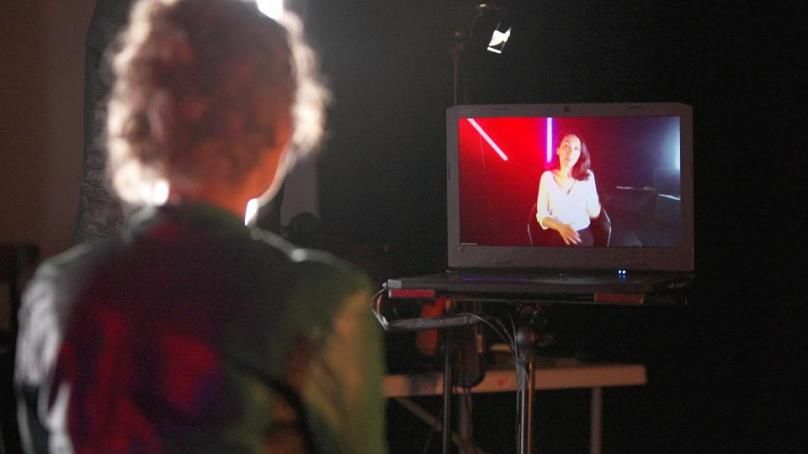
There are also important issues of privacy to contend with, but Loubna said she was hopeful on that front, telling us that data can be anonymised. As part of a high-level expert group advising the European Commission, this was one of the top priorities as well as making sure data were unbiased.
Bias it appears can take many forms and is not only resolved by ensuring data from a wide range of profiles. AI, Loubna revealed, is a multi-cultural space, and to be so, it needs to be nourished by people from as many diverse backgrounds as possible. "AI is a spectrum of things. There are many aspects to AI than just the programming part. There is the design, the creativity. There is also the ethics of designing those systems, the user interface".
AI is therefore not just an intangible zone for tech wizards, in fact, it would be a door open to all of us. "Follow your passion", Loubna tells us, "and it can lead your career path to AI because we need all the genius and the experts to add value and make AI more inclusive and more beautiful".











