

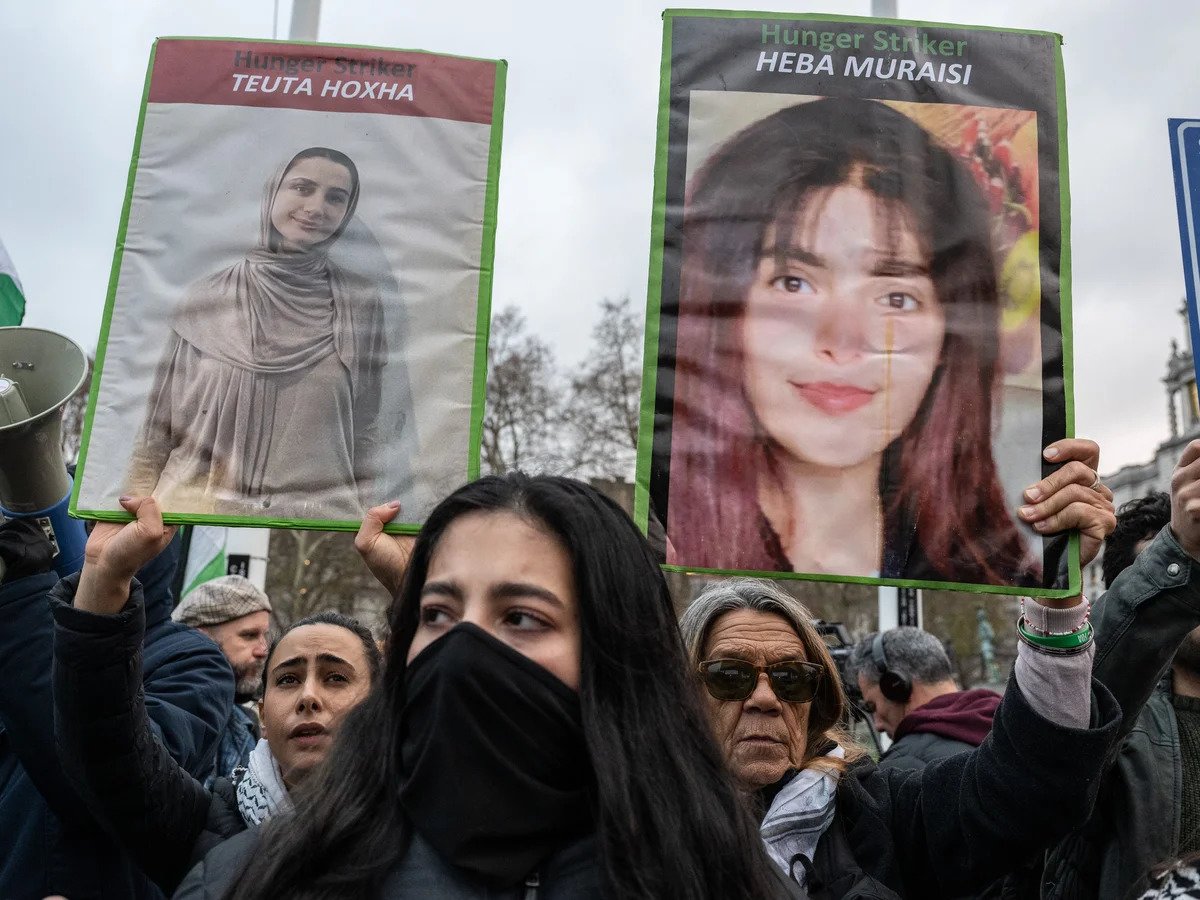
UK Hunger Striker Heba Muraisi Says She Now Thinks ‘About How or When I Could Die’ Amid Severe Health Decline
Pro-Palestine activist on prolonged hunger strike reports extreme pain, breathlessness and imminent risk of death as demands remain unmet
Heba Muraisi, a 31-year-old activist affiliated with Palestine Action, has stated that she can no longer feel hunger and now thinks “about how or when I could die” as her prolonged hunger strike enters its seventy-second day in a British prison, according to a close friend.
Muraisi’s condition has deteriorated sharply, with severe pain, muscle spasms, breathlessness and profound physical weakness signalling that she is approaching life-threatening stages of starvation.
Medical advisers have warned that continued refusal of food beyond ten weeks carries an extremely high risk of irreversible organ damage or death.
Muraisi, who was arrested in November 2024 over her alleged involvement in a break-in at the UK subsidiary of the Israeli defence firm Elbit Systems, is being held on remand at HMP New Hall in northern England.
She and other hunger strikers — including Kamran Ahmed, who has been hospitalised multiple times, and Lewie Chiaramello, fasting intermittently due to diabetes — are protesting extended pre-trial detention and demanding bail, a fair trial, reinstatement of communication rights, and an end to the listing of Palestine Action under terrorism legislation.
Supporters say Muraisi’s trial is not expected before June 2026, meaning she could have spent more than eighteen months in custody without conviction.
Friends and campaigners describe Muraisi’s physical state as increasingly fragile, noting that she has lost significant weight, has trouble reading and concentrating, and experiences spasms and difficulty breathing.
Despite the worsening condition, Muraisi told her visitor that mentally she feels “calm and a great sense of ease” even as her body declines, emphasising her determination to continue the protest until her demands are addressed.
Supporters argue that the prolonged strike reflects deep frustration with what they view as systemic failings in the UK’s handling of prolonged remand and civil liberties in politically charged cases.
The standoff has spurred public statements from health professionals and politicians urging urgent medical intervention, and solidarity from global figures and former hunger strike survivors.
British prison authorities have said that those refusing food are being monitored and supported to end strikes at any time, but health advocates warn that without hospital-level care and negotiated resolution, strikers face growing danger.
The case has sparked a wider debate about pre-trial detention, protest rights and government engagement with high-stakes hunger strikes in custody.
Muraisi’s condition has deteriorated sharply, with severe pain, muscle spasms, breathlessness and profound physical weakness signalling that she is approaching life-threatening stages of starvation.
Medical advisers have warned that continued refusal of food beyond ten weeks carries an extremely high risk of irreversible organ damage or death.
Muraisi, who was arrested in November 2024 over her alleged involvement in a break-in at the UK subsidiary of the Israeli defence firm Elbit Systems, is being held on remand at HMP New Hall in northern England.
She and other hunger strikers — including Kamran Ahmed, who has been hospitalised multiple times, and Lewie Chiaramello, fasting intermittently due to diabetes — are protesting extended pre-trial detention and demanding bail, a fair trial, reinstatement of communication rights, and an end to the listing of Palestine Action under terrorism legislation.
Supporters say Muraisi’s trial is not expected before June 2026, meaning she could have spent more than eighteen months in custody without conviction.
Friends and campaigners describe Muraisi’s physical state as increasingly fragile, noting that she has lost significant weight, has trouble reading and concentrating, and experiences spasms and difficulty breathing.
Despite the worsening condition, Muraisi told her visitor that mentally she feels “calm and a great sense of ease” even as her body declines, emphasising her determination to continue the protest until her demands are addressed.
Supporters argue that the prolonged strike reflects deep frustration with what they view as systemic failings in the UK’s handling of prolonged remand and civil liberties in politically charged cases.
The standoff has spurred public statements from health professionals and politicians urging urgent medical intervention, and solidarity from global figures and former hunger strike survivors.
British prison authorities have said that those refusing food are being monitored and supported to end strikes at any time, but health advocates warn that without hospital-level care and negotiated resolution, strikers face growing danger.
The case has sparked a wider debate about pre-trial detention, protest rights and government engagement with high-stakes hunger strikes in custody.