King Charles and Queen Camilla’s Washington Visit Becomes High-Stakes Diplomatic Stagecraft
A four-day U.S. state visit blends ceremony, political symbolism, and strained geopolitics as the British monarchy engages the Trump administration during America’s 250th anniversary year
SYSTEM-DRIVEN: The defining force behind King Charles III and Queen Camilla’s visit to Washington is the structured framework of U.S.–UK diplomatic state relations, where ceremonial monarchy, presidential politics, and strategic alliance management intersect under formal protocol.
King Charles III and Queen Camilla are in Washington, D.C. for a four-day state visit to the United States, a carefully choreographed diplomatic event designed to reinforce the long-standing alliance between the two countries.
The visit marks the monarch’s first official state trip to the U.S. as king and comes during the political symbolism of America’s 250th anniversary year.
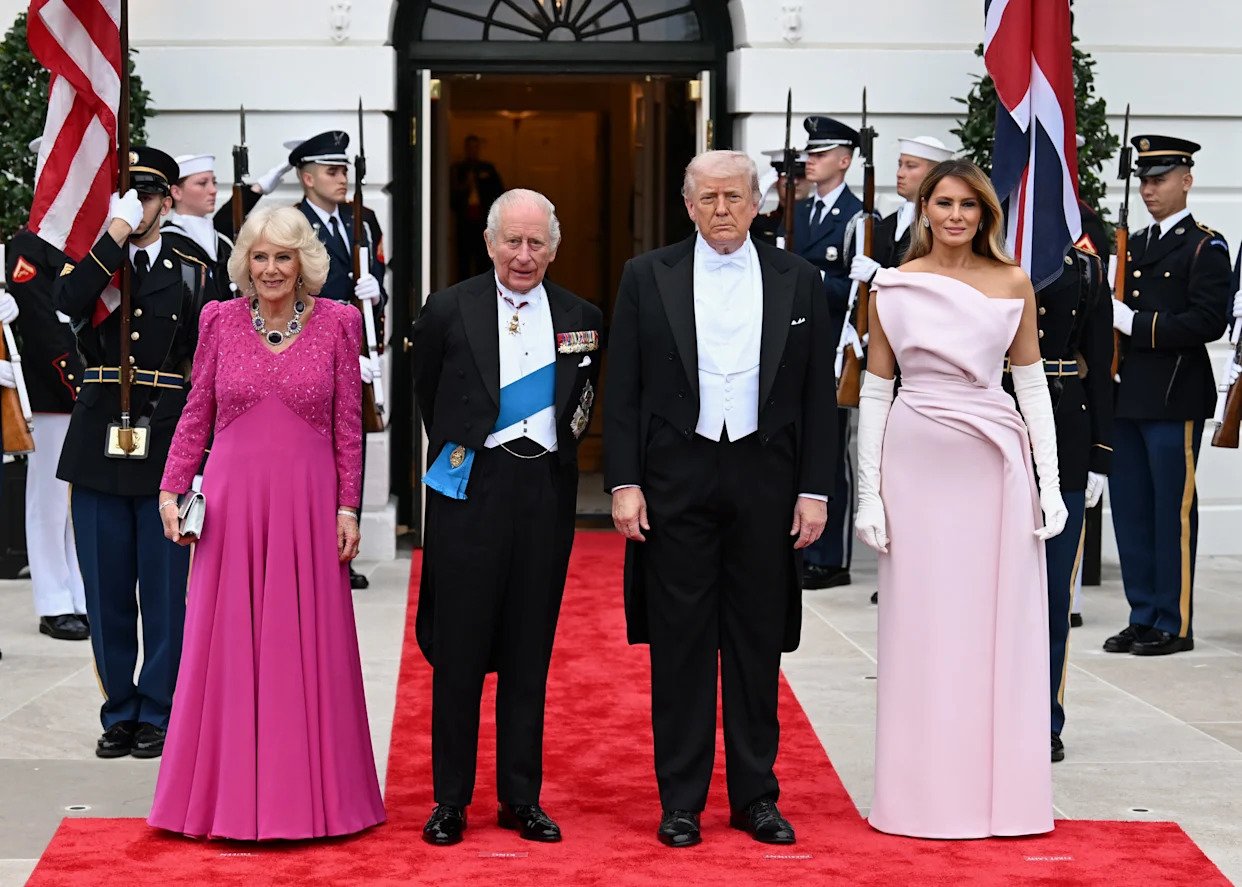
What is confirmed is that the British royals were formally welcomed at the White House by U.S. President Donald Trump and First Lady Melania Trump, followed by a sequence of state ceremonies including private meetings, a state dinner, and an address by King Charles to a joint session of Congress.
The visit also includes additional stops in New York and Virginia, reflecting both ceremonial outreach and broader diplomatic engagement.
The structure of the visit is rooted in traditional state protocol: military honors, official receptions, and tightly managed political optics.
However, beneath the ceremony lies a more complex diplomatic environment.
The U.S. and U.K. are currently navigating political friction linked to global security tensions, including disagreements over international conflicts and foreign policy alignment.
The visit is explicitly framed by both governments as an attempt to reinforce continuity in the alliance despite these strains.
A central moment of the trip is King Charles’s address to Congress, an unusual role for a foreign monarch and one that carries symbolic weight.
In that speech, he is expected to emphasize shared democratic traditions and institutional resilience.
Reports of the address highlight themes of cooperation, rule-based governance, and the importance of international partnerships, particularly at a time when both countries face competing domestic and global pressures.
The White House state dinner and accompanying events function as both diplomatic theatre and political signaling.
The guest list includes major political, business, and technology figures, underscoring how state visits in Washington now blend traditional diplomacy with modern economic and corporate influence networks.
The event also serves as a platform for reinforcing bilateral ties through soft power rather than formal treaties.
Security considerations have also shaped the visit.
It is taking place in Washington during a period of heightened alert following a recent violent incident in the city involving political figures.
This has led to intensified protective measures around all official venues and movements of the visiting delegation.
While the visit is formally ceremonial, its implications extend beyond symbolism.
It functions as a controlled diplomatic mechanism to stabilize relations, reaffirm alliance commitments, and manage political tensions without direct negotiation over contentious policy disputes.
The monarchy’s constitutional neutrality allows the British side to engage in messaging that would be more politically sensitive if delivered by elected officials.
The outcome of the visit will be measured less in formal agreements and more in tone, continuity, and perceived stability of the U.S.–UK relationship at a moment of global uncertainty, as both governments use ceremonial diplomacy to project alignment while navigating underlying policy disagreements.
King Charles III and Queen Camilla are in Washington, D.C. for a four-day state visit to the United States, a carefully choreographed diplomatic event designed to reinforce the long-standing alliance between the two countries.
The visit marks the monarch’s first official state trip to the U.S. as king and comes during the political symbolism of America’s 250th anniversary year.
What is confirmed is that the British royals were formally welcomed at the White House by U.S. President Donald Trump and First Lady Melania Trump, followed by a sequence of state ceremonies including private meetings, a state dinner, and an address by King Charles to a joint session of Congress.
The visit also includes additional stops in New York and Virginia, reflecting both ceremonial outreach and broader diplomatic engagement.
The structure of the visit is rooted in traditional state protocol: military honors, official receptions, and tightly managed political optics.
However, beneath the ceremony lies a more complex diplomatic environment.
The U.S. and U.K. are currently navigating political friction linked to global security tensions, including disagreements over international conflicts and foreign policy alignment.
The visit is explicitly framed by both governments as an attempt to reinforce continuity in the alliance despite these strains.
A central moment of the trip is King Charles’s address to Congress, an unusual role for a foreign monarch and one that carries symbolic weight.
In that speech, he is expected to emphasize shared democratic traditions and institutional resilience.
Reports of the address highlight themes of cooperation, rule-based governance, and the importance of international partnerships, particularly at a time when both countries face competing domestic and global pressures.
The White House state dinner and accompanying events function as both diplomatic theatre and political signaling.
The guest list includes major political, business, and technology figures, underscoring how state visits in Washington now blend traditional diplomacy with modern economic and corporate influence networks.
The event also serves as a platform for reinforcing bilateral ties through soft power rather than formal treaties.
Security considerations have also shaped the visit.
It is taking place in Washington during a period of heightened alert following a recent violent incident in the city involving political figures.
This has led to intensified protective measures around all official venues and movements of the visiting delegation.
While the visit is formally ceremonial, its implications extend beyond symbolism.
It functions as a controlled diplomatic mechanism to stabilize relations, reaffirm alliance commitments, and manage political tensions without direct negotiation over contentious policy disputes.
The monarchy’s constitutional neutrality allows the British side to engage in messaging that would be more politically sensitive if delivered by elected officials.
The outcome of the visit will be measured less in formal agreements and more in tone, continuity, and perceived stability of the U.S.–UK relationship at a moment of global uncertainty, as both governments use ceremonial diplomacy to project alignment while navigating underlying policy disagreements.