UK Summons Iranian Ambassador Over Incendiary Embassy Message Targeting Iranians in Britain
London accuses Tehran’s embassy of encouraging violence after a social media post urged Iranian nationals in the UK to join a ‘sacrifice’ campaign, escalating already strained diplomatic relations.
The British government has formally summoned Iran’s ambassador in London after accusing the Iranian embassy of publishing social media content that could be interpreted as encouraging violence involving Iranian nationals living in the United Kingdom.
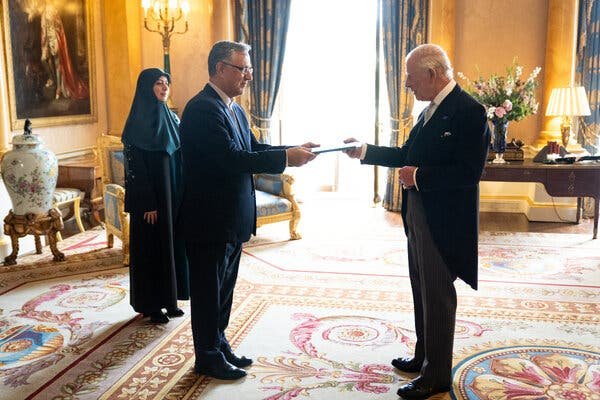
What is confirmed is that the UK Foreign, Commonwealth and Development Office instructed Middle East minister Hamish Falconer to call in the ambassador following what officials described as “unacceptable and inflammatory” online communications from the Iranian diplomatic mission.
The embassy was warned that it must stop any messaging that could be seen as promoting or legitimising violence inside the UK or abroad.
The controversy centres on a Telegram post attributed to the Iranian embassy that called on Iranians in Britain to participate in a campaign framed around loyalty and sacrifice for the Iranian state.
The message reportedly used language invoking national duty and martyrdom, including calls for supporters to demonstrate readiness to “give their lives” for their country.
UK officials assessed the framing as potentially encouraging violent action, even if the embassy presented it as symbolic political expression.
The key issue is the interpretation of diplomatic communication boundaries in a highly sensitive security context.
Britain treats embassies as protected diplomatic channels, but they remain subject to expectations under international norms not to engage in activity that could be construed as incitement or operational mobilisation on foreign soil.
UK officials stated that the messaging crossed that threshold by appearing to target or mobilise individuals residing in Britain.
This is not an isolated diplomatic friction point.
The summons comes amid a wider deterioration in UK-Iran relations, driven by mutual accusations involving espionage cases, alleged foreign influence operations, and broader regional tensions involving Iran’s role in Middle Eastern conflicts.
British authorities have repeatedly raised concerns about Iranian-linked activity on UK soil, while Tehran has consistently rejected allegations of hostile conduct and interference.
The immediate consequence of the summons is diplomatic pressure on Iran’s embassy to publicly clarify or retract the messaging, alongside increased scrutiny of its communications.
British officials have also signalled that national security considerations will guide further responses, including potential additional diplomatic measures if similar content reappears.
The incident highlights a growing challenge for European governments: managing diplomatic relations with states whose overseas messaging increasingly blends political mobilisation with rhetoric that domestic authorities view through a security lens.
In this case, the dispute has shifted from abstract diplomatic disagreement to a direct confrontation over how far embassy communication can go before it is treated as a public safety issue in the host country.
What is confirmed is that the UK Foreign, Commonwealth and Development Office instructed Middle East minister Hamish Falconer to call in the ambassador following what officials described as “unacceptable and inflammatory” online communications from the Iranian diplomatic mission.
The embassy was warned that it must stop any messaging that could be seen as promoting or legitimising violence inside the UK or abroad.
The controversy centres on a Telegram post attributed to the Iranian embassy that called on Iranians in Britain to participate in a campaign framed around loyalty and sacrifice for the Iranian state.
The message reportedly used language invoking national duty and martyrdom, including calls for supporters to demonstrate readiness to “give their lives” for their country.
UK officials assessed the framing as potentially encouraging violent action, even if the embassy presented it as symbolic political expression.
The key issue is the interpretation of diplomatic communication boundaries in a highly sensitive security context.
Britain treats embassies as protected diplomatic channels, but they remain subject to expectations under international norms not to engage in activity that could be construed as incitement or operational mobilisation on foreign soil.
UK officials stated that the messaging crossed that threshold by appearing to target or mobilise individuals residing in Britain.
This is not an isolated diplomatic friction point.
The summons comes amid a wider deterioration in UK-Iran relations, driven by mutual accusations involving espionage cases, alleged foreign influence operations, and broader regional tensions involving Iran’s role in Middle Eastern conflicts.
British authorities have repeatedly raised concerns about Iranian-linked activity on UK soil, while Tehran has consistently rejected allegations of hostile conduct and interference.
The immediate consequence of the summons is diplomatic pressure on Iran’s embassy to publicly clarify or retract the messaging, alongside increased scrutiny of its communications.
British officials have also signalled that national security considerations will guide further responses, including potential additional diplomatic measures if similar content reappears.
The incident highlights a growing challenge for European governments: managing diplomatic relations with states whose overseas messaging increasingly blends political mobilisation with rhetoric that domestic authorities view through a security lens.
In this case, the dispute has shifted from abstract diplomatic disagreement to a direct confrontation over how far embassy communication can go before it is treated as a public safety issue in the host country.