King Charles Uses Washington Visit to Warn on Executive Power as Trump Hosts UK State Trip
The British monarch’s address to U.S. lawmakers highlights constitutional balance, democratic resilience, and the political symbolism of a closely choreographed Trump–UK diplomatic encounter
ACTOR-DRIVEN: The central driver of this story is the diplomatic and constitutional messaging delivered by King Charles III during a state visit to Washington, where the British monarchy and the Trump administration intersect in a highly symbolic political setting.
King Charles III used his official visit to the United States to deliver a carefully framed warning about the importance of checks and balances on executive authority, speaking in a context designed to reinforce shared democratic traditions between the United Kingdom and the United States.
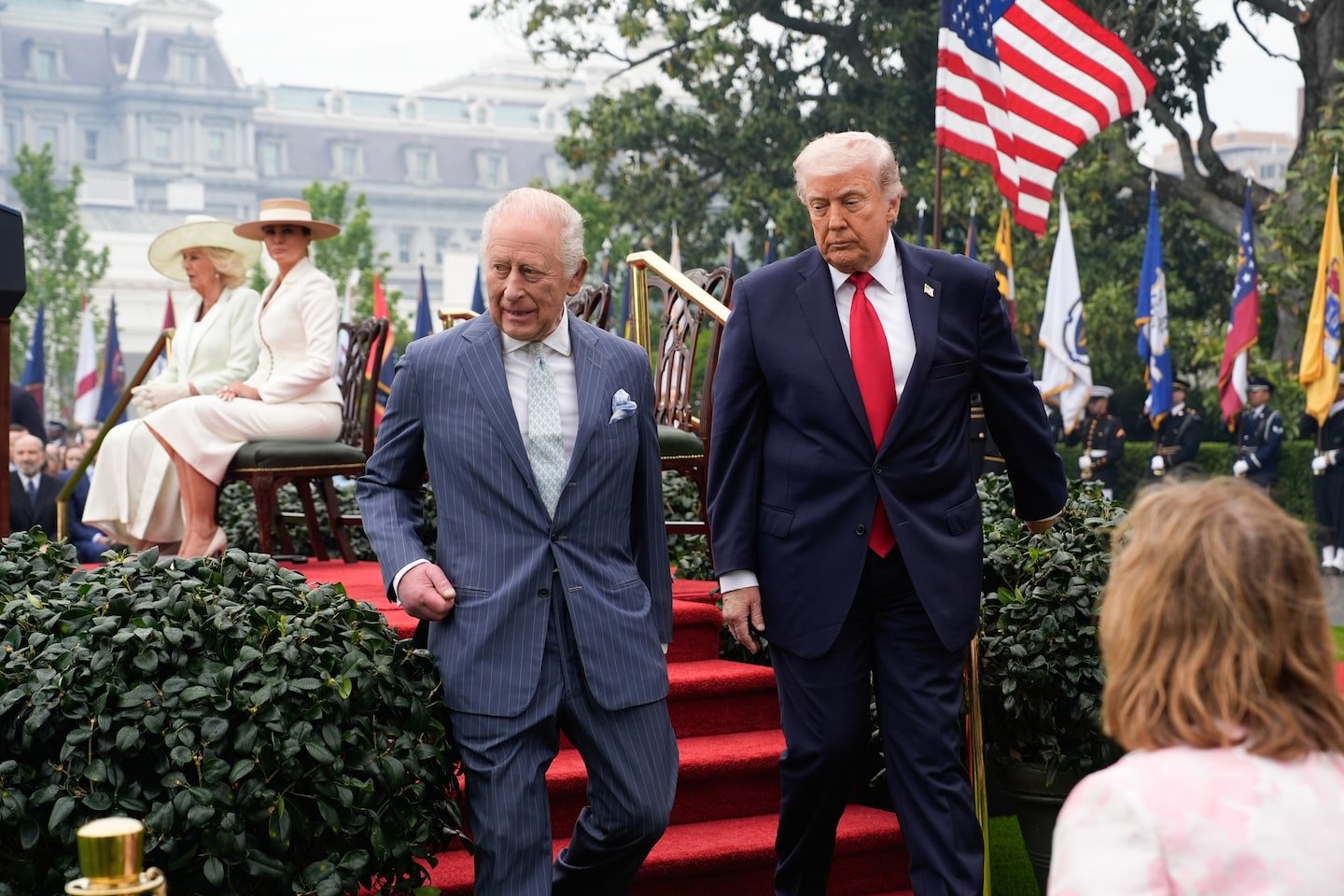
The remarks were delivered during a formal address to U.S. lawmakers in Washington as part of a multi-day state visit hosted by President Donald Trump.
What is confirmed is that the visit includes high-level ceremonial engagements between the British royal family and the U.S. executive branch, including an official White House reception, a state dinner, and meetings with senior political figures.
The address to Congress is a rare diplomatic moment in which a foreign monarch is invited to speak directly to the U.S. legislative branch, underscoring the symbolic weight of the visit.
In his remarks, King Charles emphasized the durability of democratic systems that rely on institutional restraint, suggesting that long-term political stability depends on maintaining clear limits between branches of government.
The framing is consistent with longstanding British constitutional themes, but delivered in a U.S. political environment marked by heightened polarization and ongoing debates over executive authority.
The Trump administration’s hosting of the visit adds a further layer of political complexity.
State visits are typically designed to reinforce bilateral alliances through ceremonial diplomacy, but they also function as opportunities for subtle signaling on governance, policy alignment, and international cooperation.
The presence of a British monarch addressing Congress during an American presidential administration that has frequently emphasized strong executive leadership amplifies the contrast in constitutional traditions.
The visit also reflects broader strategic considerations in U.S.–UK relations, which remain among the closest bilateral partnerships in defense, intelligence sharing, and economic cooperation.
Despite political differences in tone and policy priorities, both governments continue to rely on institutional continuity to manage global security challenges and economic stability.
While the speech focused on democratic principles, its practical impact lies in its diplomatic function: reinforcing shared institutional identity while avoiding direct criticism of any specific administration.
This balancing act is central to constitutional monarchy diplomacy, where the monarch serves as a symbolic representative rather than a political actor.
The visit is unfolding against a backdrop of global political volatility, where questions of executive power, institutional trust, and democratic resilience are increasingly prominent across multiple Western political systems.
In that context, the monarch’s remarks function less as policy intervention and more as a reinforcement of structural norms.
As the state visit continues, its immediate consequence is the reinforcement of U.S.–UK diplomatic alignment through ceremonial channels, while placing renewed public attention on the role of constitutional limits in modern democratic governance.
King Charles III used his official visit to the United States to deliver a carefully framed warning about the importance of checks and balances on executive authority, speaking in a context designed to reinforce shared democratic traditions between the United Kingdom and the United States.
The remarks were delivered during a formal address to U.S. lawmakers in Washington as part of a multi-day state visit hosted by President Donald Trump.
What is confirmed is that the visit includes high-level ceremonial engagements between the British royal family and the U.S. executive branch, including an official White House reception, a state dinner, and meetings with senior political figures.
The address to Congress is a rare diplomatic moment in which a foreign monarch is invited to speak directly to the U.S. legislative branch, underscoring the symbolic weight of the visit.
In his remarks, King Charles emphasized the durability of democratic systems that rely on institutional restraint, suggesting that long-term political stability depends on maintaining clear limits between branches of government.
The framing is consistent with longstanding British constitutional themes, but delivered in a U.S. political environment marked by heightened polarization and ongoing debates over executive authority.
The Trump administration’s hosting of the visit adds a further layer of political complexity.
State visits are typically designed to reinforce bilateral alliances through ceremonial diplomacy, but they also function as opportunities for subtle signaling on governance, policy alignment, and international cooperation.
The presence of a British monarch addressing Congress during an American presidential administration that has frequently emphasized strong executive leadership amplifies the contrast in constitutional traditions.
The visit also reflects broader strategic considerations in U.S.–UK relations, which remain among the closest bilateral partnerships in defense, intelligence sharing, and economic cooperation.
Despite political differences in tone and policy priorities, both governments continue to rely on institutional continuity to manage global security challenges and economic stability.
While the speech focused on democratic principles, its practical impact lies in its diplomatic function: reinforcing shared institutional identity while avoiding direct criticism of any specific administration.
This balancing act is central to constitutional monarchy diplomacy, where the monarch serves as a symbolic representative rather than a political actor.
The visit is unfolding against a backdrop of global political volatility, where questions of executive power, institutional trust, and democratic resilience are increasingly prominent across multiple Western political systems.
In that context, the monarch’s remarks function less as policy intervention and more as a reinforcement of structural norms.
As the state visit continues, its immediate consequence is the reinforcement of U.S.–UK diplomatic alignment through ceremonial channels, while placing renewed public attention on the role of constitutional limits in modern democratic governance.