
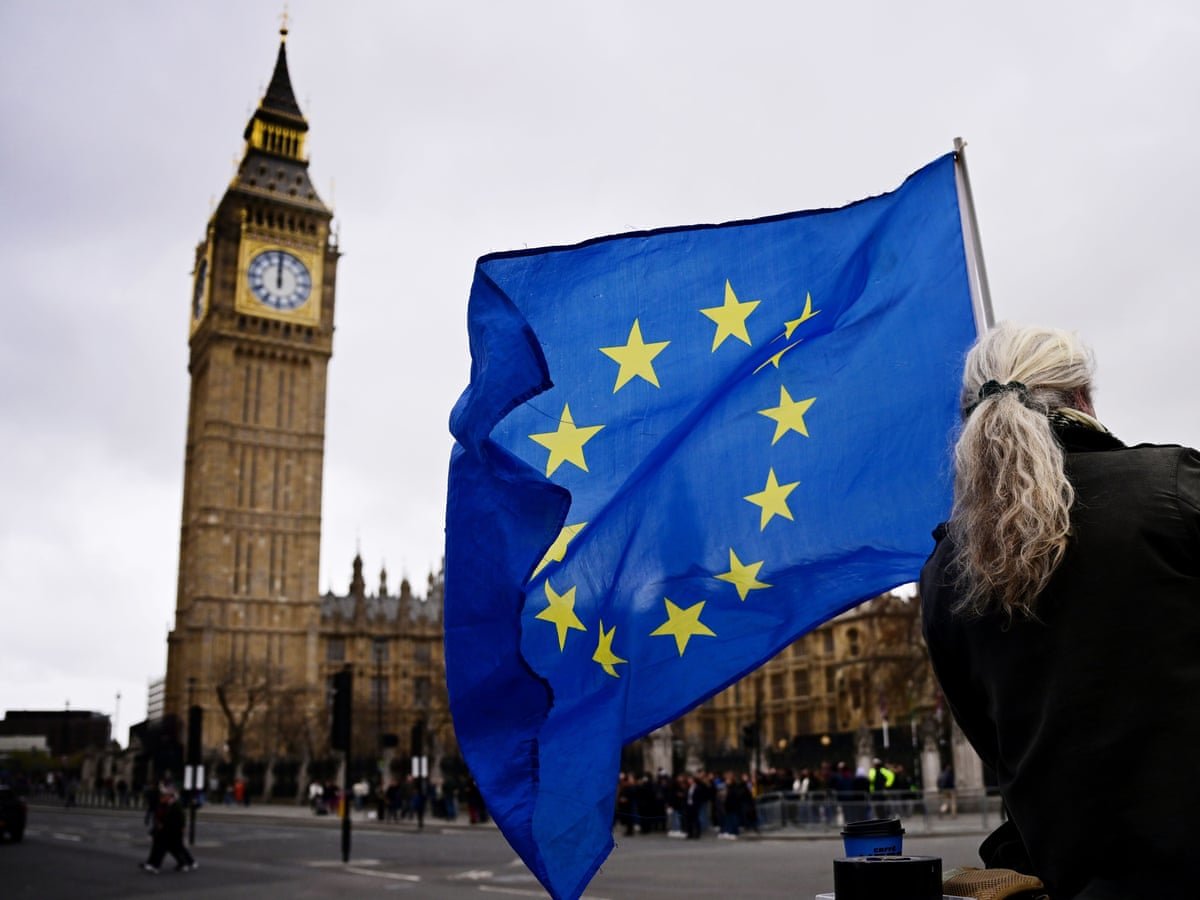
UK–EU Relations Stabilize in Post-Brexit Reset as Rejoining Debate Faces Major Political Barriers
Cooperation is deepening on trade, security, and youth mobility, but full EU re-entry remains politically and structurally remote despite renewed public discussion.
SYSTEM-DRIVEN dynamics define the current UK–EU relationship, shaped by the legal and institutional architecture established after Brexit, which continues to govern trade, mobility, regulation, and security cooperation between the United Kingdom and the European Union.
Since the United Kingdom formally left the European Union, relations have moved through a prolonged phase of adjustment, shifting from confrontation over withdrawal terms to pragmatic cooperation on shared economic and geopolitical interests.
What is now emerging is a structured “reset” approach focused on stabilizing areas of friction rather than reopening the question of membership.
At the core of the relationship is the Trade and Cooperation Agreement, which governs post-Brexit economic ties.
It removed tariffs and quotas on most goods but introduced new customs checks, regulatory divergence, and administrative friction that have particularly affected small and medium-sized exporters.
While trade volumes have remained substantial, business groups on both sides continue to report increased costs and reduced efficiency compared with pre-Brexit arrangements.
Security cooperation has proven more resilient than trade relations.
Intelligence sharing and coordination on sanctions—particularly in response to Russia’s war in Ukraine—have reinforced practical alignment between London and Brussels.
This has created a narrow but important area where strategic necessity has overridden political division, even as institutional separation remains intact.
A growing area of discussion is youth mobility and limited regulatory alignment in sectors such as energy, food standards, and financial services.
European policymakers have indicated openness to targeted agreements that reduce friction, while UK leaders have been cautious about any arrangement perceived as reversing Brexit commitments.
These negotiations are incremental rather than transformative, reflecting domestic political constraints on both sides.
The question of the United Kingdom rejoining the European Union remains politically highly sensitive and structurally complex.
Re-entry would require full acceptance of the EU’s four freedoms—goods, services, capital, and people—as well as contributions to the EU budget and compliance with European Court of Justice jurisdiction in relevant areas.
These requirements would represent a fundamental reversal of the Brexit settlement.
Public opinion in the United Kingdom has shown increased support in some polls for closer alignment with the EU compared with immediate post-Brexit years, driven in part by economic pressures and reduced growth performance relative to expectations.
However, political consensus remains fragmented.
Major parties differ significantly on whether the relationship should move toward deeper alignment, a Swiss-style model of sectoral agreements, or maintenance of the current framework.
From the European Union’s perspective, any UK return would require not only domestic British political change but also unanimous agreement among member states.
Enlargement fatigue, institutional reform priorities, and concerns about setting precedent for other departing members make full re-entry a distant prospect in current conditions.
The relationship is therefore best understood as a managed equilibrium: neither reversal of Brexit nor deep integration, but a gradual expansion of technical cooperation where mutual benefit is clear.
That trajectory is reinforced by economic interdependence and shared security concerns, which continue to limit the scope for a purely ideological break.
Since the United Kingdom formally left the European Union, relations have moved through a prolonged phase of adjustment, shifting from confrontation over withdrawal terms to pragmatic cooperation on shared economic and geopolitical interests.
What is now emerging is a structured “reset” approach focused on stabilizing areas of friction rather than reopening the question of membership.
At the core of the relationship is the Trade and Cooperation Agreement, which governs post-Brexit economic ties.
It removed tariffs and quotas on most goods but introduced new customs checks, regulatory divergence, and administrative friction that have particularly affected small and medium-sized exporters.
While trade volumes have remained substantial, business groups on both sides continue to report increased costs and reduced efficiency compared with pre-Brexit arrangements.
Security cooperation has proven more resilient than trade relations.
Intelligence sharing and coordination on sanctions—particularly in response to Russia’s war in Ukraine—have reinforced practical alignment between London and Brussels.
This has created a narrow but important area where strategic necessity has overridden political division, even as institutional separation remains intact.
A growing area of discussion is youth mobility and limited regulatory alignment in sectors such as energy, food standards, and financial services.
European policymakers have indicated openness to targeted agreements that reduce friction, while UK leaders have been cautious about any arrangement perceived as reversing Brexit commitments.
These negotiations are incremental rather than transformative, reflecting domestic political constraints on both sides.
The question of the United Kingdom rejoining the European Union remains politically highly sensitive and structurally complex.
Re-entry would require full acceptance of the EU’s four freedoms—goods, services, capital, and people—as well as contributions to the EU budget and compliance with European Court of Justice jurisdiction in relevant areas.
These requirements would represent a fundamental reversal of the Brexit settlement.
Public opinion in the United Kingdom has shown increased support in some polls for closer alignment with the EU compared with immediate post-Brexit years, driven in part by economic pressures and reduced growth performance relative to expectations.
However, political consensus remains fragmented.
Major parties differ significantly on whether the relationship should move toward deeper alignment, a Swiss-style model of sectoral agreements, or maintenance of the current framework.
From the European Union’s perspective, any UK return would require not only domestic British political change but also unanimous agreement among member states.
Enlargement fatigue, institutional reform priorities, and concerns about setting precedent for other departing members make full re-entry a distant prospect in current conditions.
The relationship is therefore best understood as a managed equilibrium: neither reversal of Brexit nor deep integration, but a gradual expansion of technical cooperation where mutual benefit is clear.
That trajectory is reinforced by economic interdependence and shared security concerns, which continue to limit the scope for a purely ideological break.